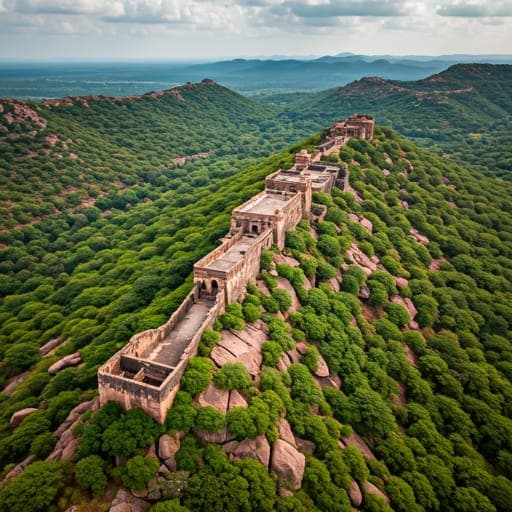
The history of Ranthambore National Park is inseparable from the history of Rajasthan itself. For over nine centuries this landscape of rocky ridges, lake-filled valleys and ancient forests has witnessed the rise and fall of kingdoms, royal tiger hunts, a devastating poaching crisis — and one of the most remarkable wildlife recoveries anywhere in the world. Here is the full story, from Rajput fortress to global tiger icon.
The Ranthambore Fort and the Age of Kings
The story begins with Ranthambore Fort, built in the 10th century by the Chauhan Rajputs on a rocky outcrop at the heart of what is now the national park. The fort changed hands between Rajput clans, the Delhi Sultanate and the Mughal emperors over several centuries — Akbar himself besieged it in 1568 — and in 2013 it was inscribed on the UNESCO World Heritage list as part of the Hill Forts of Rajasthan.
Royal Hunting Grounds of the Jaipur Maharajas
From the late 18th century the forests around the fort served as the private hunting grounds of the Maharajas of Jaipur. Tiger shoots — shikar — were displays of royal power; Queen Elizabeth II and Prince Philip famously joined a hunt here in 1961. Yet the same royal control that staged these hunts also kept out timber cutters, graziers and commercial poachers, inadvertently preserving the forest and its wildlife while much of India's jungle disappeared.
Project Tiger, 1973: A Nation Saves Its Tiger
By the early 1970s the Bengal tiger was in crisis — the 1972 census counted fewer than 1,900 tigers nationwide, down from perhaps 40,000 at the turn of the century. In 1973 Prime Minister Indira Gandhi launched Project Tiger, and Ranthambore — building on the Sawai Madhopur Wildlife Sanctuary declared in 1955 — was chosen as one of the nine original tiger reserves. Poaching penalties were strengthened, villages inside the core were relocated, and the forest was given room to breathe. In 1980 the core area became a full national park, and the reserve later grew to include the Sawai Man Singh and Kailadevi sanctuaries — 1,411 square kilometres in total today.
Boom, Bust and the Poaching Crisis of 2004–05
Through the 1980s Ranthambore's tigers grew bold and numerous, and the park became world-famous for daylight sightings. But success bred complacency. In 2004, neighbouring Sariska Tiger Reserve was found to have lost every single tiger to poachers — a national scandal — and the census that followed at Ranthambore delivered its own shock: only around 26 tigers remained, roughly half the number claimed a few years earlier. Organised poaching gangs had been quietly emptying Rajasthan's forests.
The crisis triggered sweeping reforms: the National Tiger Conservation Authority was created in 2006, anti-poaching patrols were rebuilt, and scientific camera-trap monitoring replaced the discredited pugmark counts. Ranthambore's recovery was fast and emphatic — so successful that from 2008 its tigers were airlifted to repopulate Sariska, the tigress Machli's daughters among the founders of that second-chance population.
Ranthambore Today
From that low of around 26, the reserve now supports around 80 tigers — so many that young adults regularly disperse into the Kailadevi buffer and beyond, and some have been moved to seed other Rajasthan reserves. The park's individually named tigers, from Machli to today's generation, carry the story forward; you can trace all of them on our tiger family tree. Ranthambore's transformation from royal hunting ground to conservation icon remains one of wildlife protection's most compelling success stories — and every safari visitor is now part of the economy that sustains it.
Timeline at a Glance
10th century — Chauhan Rajputs build Ranthambore Fort. 1568 — Akbar captures the fort. Late 1700s onward — hunting preserve of the Jaipur Maharajas. 1955 — Sawai Madhopur Wildlife Sanctuary declared. 1973 — one of Project Tiger's nine original reserves. 1980 — national park status. 2005 — poaching crisis; only ~26 tigers counted. 2008 — Ranthambore tigers begin repopulating Sariska. 2013 — fort inscribed by UNESCO. Today — around 80 tigers across a 1,411 sq km reserve.
Frequently Asked Questions
When did Ranthambore become a national park?
It joined Project Tiger as one of the nine original reserves in 1973 and was upgraded to full national park status in 1980, building on a wildlife sanctuary first declared in 1955.
Who built Ranthambore Fort?
The Chauhan Rajputs, in the 10th century. It later passed through the hands of the Delhi Sultanate and the Mughals — Akbar took it in 1568 — and is now a UNESCO World Heritage Site.
What happened to Ranthambore's tigers in 2005?
A census following the Sariska poaching scandal found only around 26 tigers in Ranthambore — organised poaching had halved the population. Reformed protection and monitoring drove the recovery to today's roughly 80 tigers.
Similar Articles
Caracal in Ranthambore: India's Rarest Cat Is Growing
The caracal is India's rarest wild cat — and its numbers are growing in Ranthambore, now home to around 35. Meet the tufted 'cat of kings' and how to spot one.
How Many Tigers Are in Ranthambore? Population 2026
How many tigers are in Ranthambore? Around 80 in the reserve as of 2025, with 55–60 in the safari zones. Why quoted counts differ — and your sighting odds.
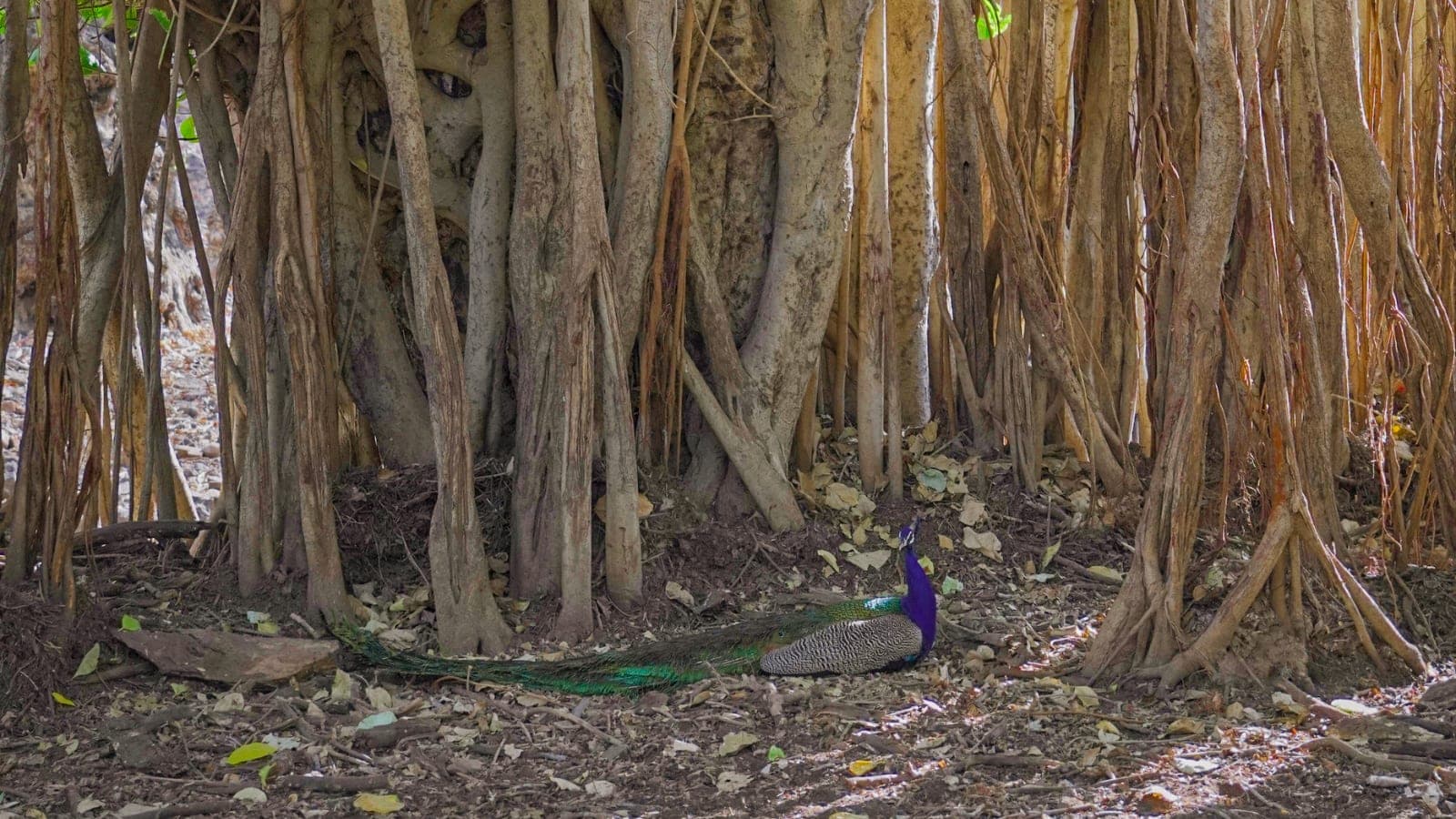
Animals of Ranthambore National Park: Full Wildlife List
Full animals list for Ranthambore National Park: tigers, leopards, sloth bears, hyenas, crocodiles and 40+ mammal species — plus the zones to see them in.
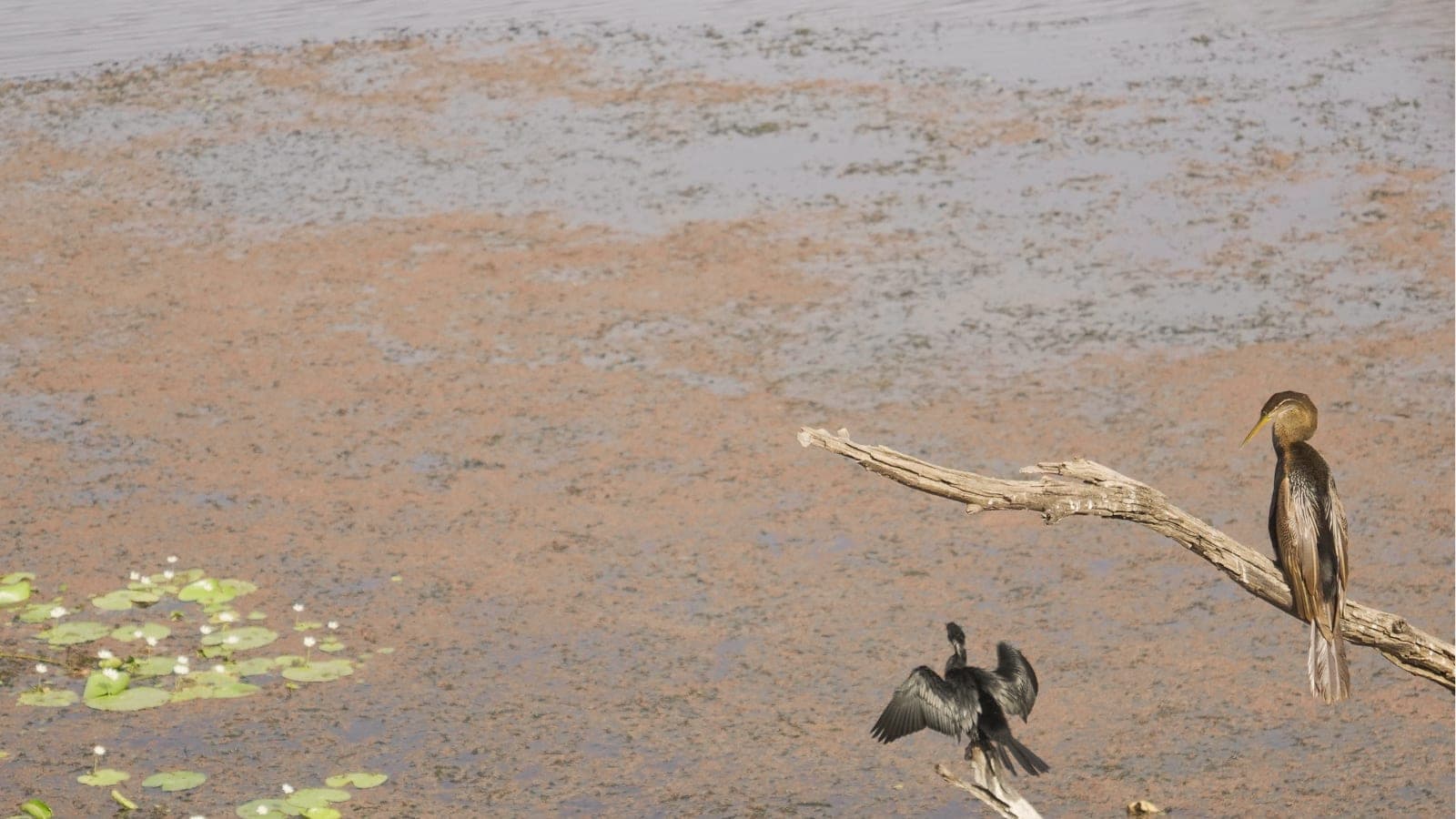
Birds of Ranthambore: Species, Best Zones & Season
Birds of Ranthambore: 320+ recorded species, from painted storks to crested serpent eagles. The best zones, best season and what to look for on safari.
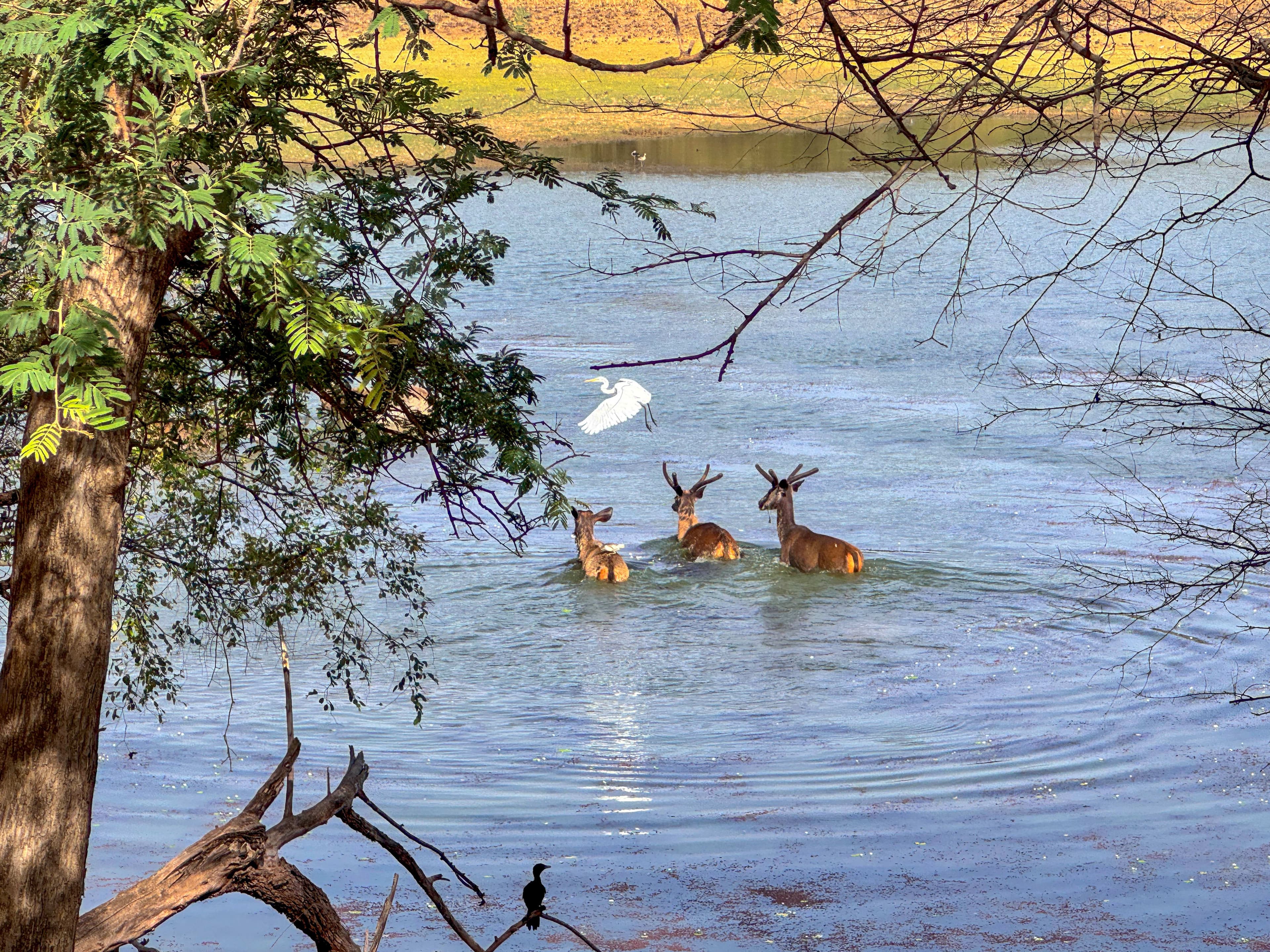
Flora of Ranthambore: Trees & Plants of the Dry Forest
Flora of Ranthambore National Park: Dhok forests, the giant banyan at Jogi Mahal, flame-of-the-forest blooms and the plants that keep its tigers hunting.