Every regular on a Ranthambore safari has a favourite tiger story, but few come close to the one about Ustad. Born in 2006 to Tiger T20 (Jhumroo) and Tigress T22 (Gayatri) — and carrying the bloodline of the legendary Machli (T16) through his father, Machli's son Jhumroo — T24 grew into the most dominant male the park had seen in years, ruling Zones 1, 2, and 6 during his prime.
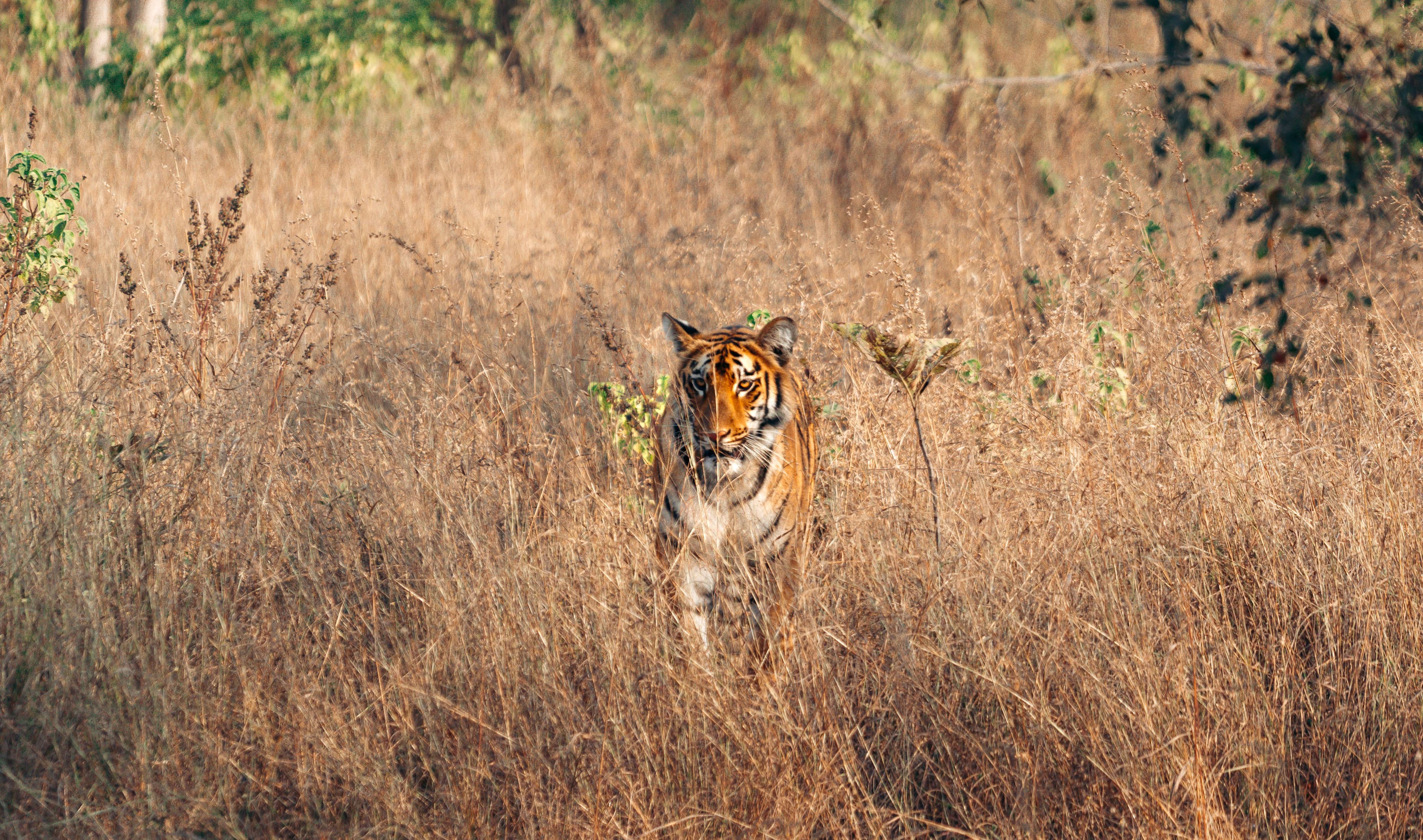
Local safari guides gave him the name that stuck for good: Ustad, meaning “master” or “expert” in Hindi. It wasn't a name he had to earn through size alone. He earned it through nerve. On a typical Ranthambore safari, tigers vanish into the grass the moment a jeep or canter approaches. Ustad didn't. He would sit in the middle of the safari track, unbothered, while vehicles queued around him. After a kill, instead of dragging his prey into cover, he'd feed right at the roadside — in full view of every camera pointed his way. For wildlife photography enthusiasts chasing that one perfect Bengal tiger sighting, an Ustad encounter was close to guaranteed drama.
A Territory Built on Dominance
At his peak, Ustad's range stretched across three of Ranthambore's richest zones, and his genes spread just as widely. His well-known mate was Tigress T39 (Noor), and he's recorded as the father of several litters across the reserve — his bloodline is still visible in Ranthambore's tiger family tree today, which is part of why his story keeps coming up on every serious Ranthambore safari and Rajasthan heritage itinerary.
The Controversy That Defined Him
Ustad's boldness was also what turned him into Ranthambore's most divisive tiger. Between 2010 and 2015, he was linked to the deaths of four people, including forest guard Rampal Saini — the incident that finally forced the Forest Department's hand. He was tranquilized and relocated to Sajjangarh Biological Park in Udaipur, ending his life in the wild for good. We've covered the incidents, the evidence, and the debate in full in Was Ustad T24 really a man-eater?
The move triggered the “Save Ustad” campaign, and it wasn't a small, fringe protest — it pulled in conservationists, wildlife lawyers, and ordinary visitors who'd sat feet away from him on safari and never felt threatened. Their argument was straightforward: every one of the four deaths happened deep inside his own core territory, not in villages, not near human settlements. A genuine man-eater, they argued, would have gone looking for people outside the forest. Ustad never did. The case climbed all the way to the Jaipur High Court and then the Supreme Court of India. Both upheld the Forest Department's decision. Ustad never came back to Ranthambore.
Illness, Decline, and Death
Life at Sajjangarh was where Ustad's story took its saddest turn. He first developed megacolon, a serious intestinal disorder, and was later diagnosed with a bone tumor. In 2022, at around 17 years old, he died in captivity — never having set foot in the regal wilderness of Ranthambore again after 2015.
Noor, T57, and a Troubling Pattern
There's a strange footnote to Ustad's story that's been getting more attention lately. After his relocation, his mate Noor (T39) went on to pair with Tiger T57 — known to some guides as Shiva, to others as Aurangzeb. Both males, Ustad and T57, ultimately died of cancer. Noor is still alive today.
That coincidence has fed a broader, uneasy conversation in Ranthambore circles: a rising number of cancer cases among the park's tigers. One theory points to inbreeding within a genetically constrained population. It's a tempting explanation, but it doesn't hold up well scientifically — cancer isn't generally understood to be a direct consequence of inbreeding, and there's little research connecting the two in tigers specifically.
A second theory looks outward, at the mining activity around the Ranthambore landscape. The idea is that heavy metals like lead and arsenic, released from mining operations, contaminate soil and vegetation, accumulate in herbivores, and eventually work their way up the food chain to apex predators. It's a plausible pathway on paper, but like the inbreeding theory, it remains unproven — no conclusive research has tied Ranthambore's tiger cancer cases to mining contamination.
Legacy
Ustad remains one of the most photographed, most discussed, and most argued-over tigers in Ranthambore's history — proof that a single dominant male can shape both a park's tiger population and the national conversation around human-wildlife conflict. For anyone booking a Ranthambore safari today, his story is a reminder of what makes this reserve different from any other luxury wildlife tour destination in India: every sighting here comes with decades of history behind it.
Frequently Asked Questions
Who were Ustad's parents?
Ustad (T24) was the son of Tiger T20 (Jhumroo) and Tigress T22 (Gayatri), and a grandson of the legendary Tigress T16 (Machli) through his father — Jhumroo was one of Machli's sons.
Why was Ustad relocated from Ranthambore?
He was linked to four human deaths between 2010 and 2015, including that of forest guard Rampal Saini. Supporters argued all incidents occurred within his own core territory, but the Forest Department relocated him to Sajjangarh Biological Park in Udaipur, a decision later upheld by the Jaipur High Court and the Supreme Court of India.
How did Ustad die?
He first developed megacolon and later a bone tumor while in captivity at Sajjangarh. He died in 2022 at approximately 17 years old.
What happened to Ustad's mate, Noor?
Tigress Noor (T39) later paired with Tiger T57 (known locally as Shiva or Aurangzeb). Both Ustad and T57 eventually died of cancer, while Noor is still alive — a pattern that has fuelled concern over rising cancer rates among Ranthambore's tigers, though no cause has been scientifically confirmed.
Similar Articles
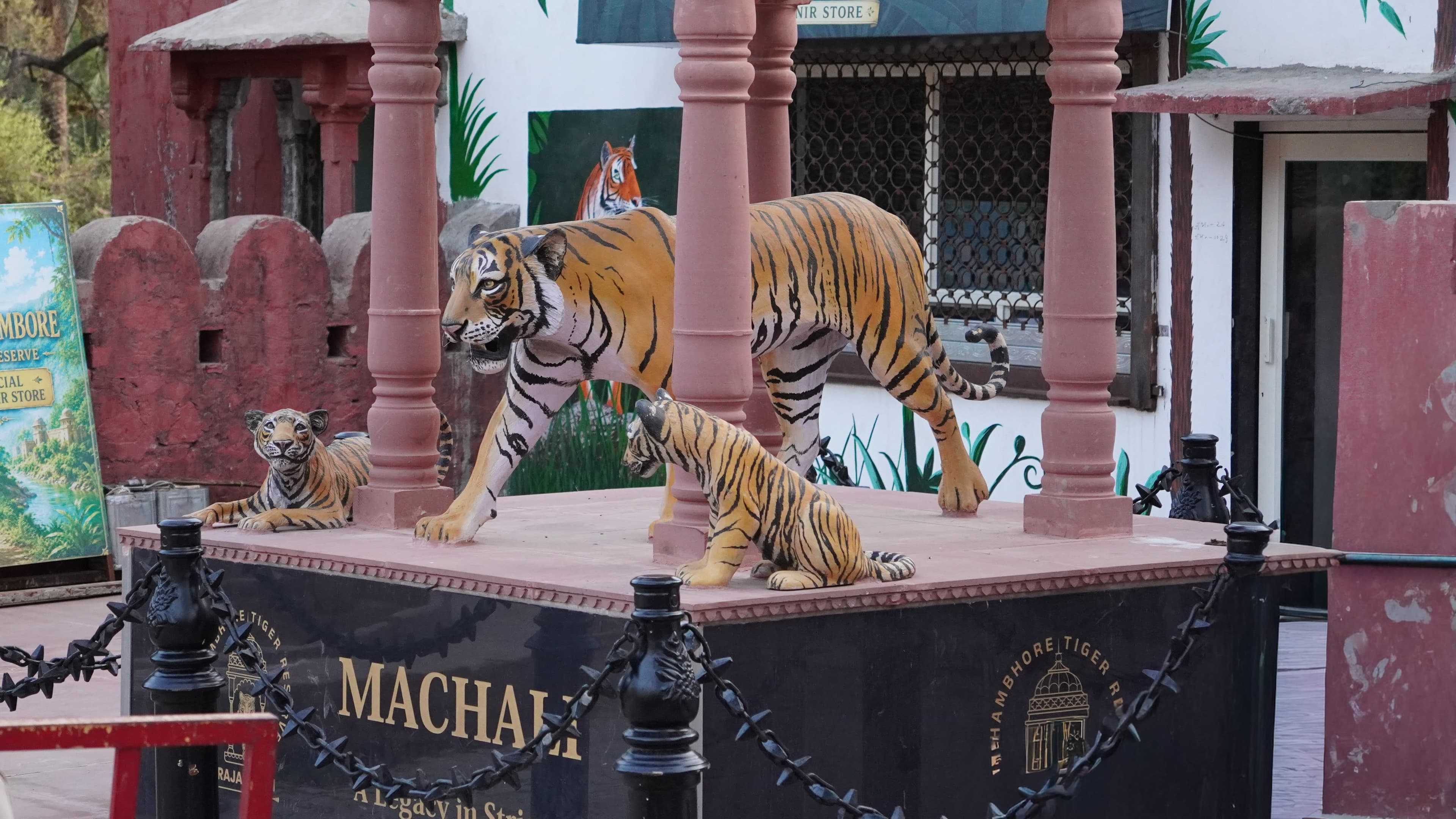
Machli (T-16) — The Tiger Queen of Ranthambore
Discover the captivating story of Machhli (T-16), Ranthambore’s most famous tigress. Known as the "Crocodile Killer" and "Queen of the Jungle," her fierce spirit, legendary battles, and extraordinary legacy redefined the wilderness of India.
Is really Ustad (T-24) a Man-Eater?
Was Ustad (T-24) truly India's most feared man-eater, or was he a wild tiger caught in the growing conflict between greedy human and nature? Unearth the story behind one of Ranthambore's most controversial legends.
Aurangzeb (T-57) — The Male Behind Ranthambore's Zone 1 Cubs
Aurangzeb (T-57), also recorded as Singhasth, was a dominant Ranthambore male who fathered Noor's 2016 litter — including Sultana. He did not, despite the myth, father Riddhi and Siddhi.
Ganesh (T-120) 'Charger' — The King of Ranthambore's Lakes
Ganesh (T-120), the mock-charging male of Zones 3–4, is Riddhi's mate, father of Shubh and the 2026 cubs — and, through his mother Chanda, a great-great-grandson of Machhli himself.
Husn Ara (T-30) — Matriarch of the Gilai Sagar Line
Husn Ara (T-30), a prolific tigress of the Gilai Sagar dynasty, mothered a string of well-known Ranthambore tigers including Hamir (T-33), Fateh (T-42) and Surzan (T-43).