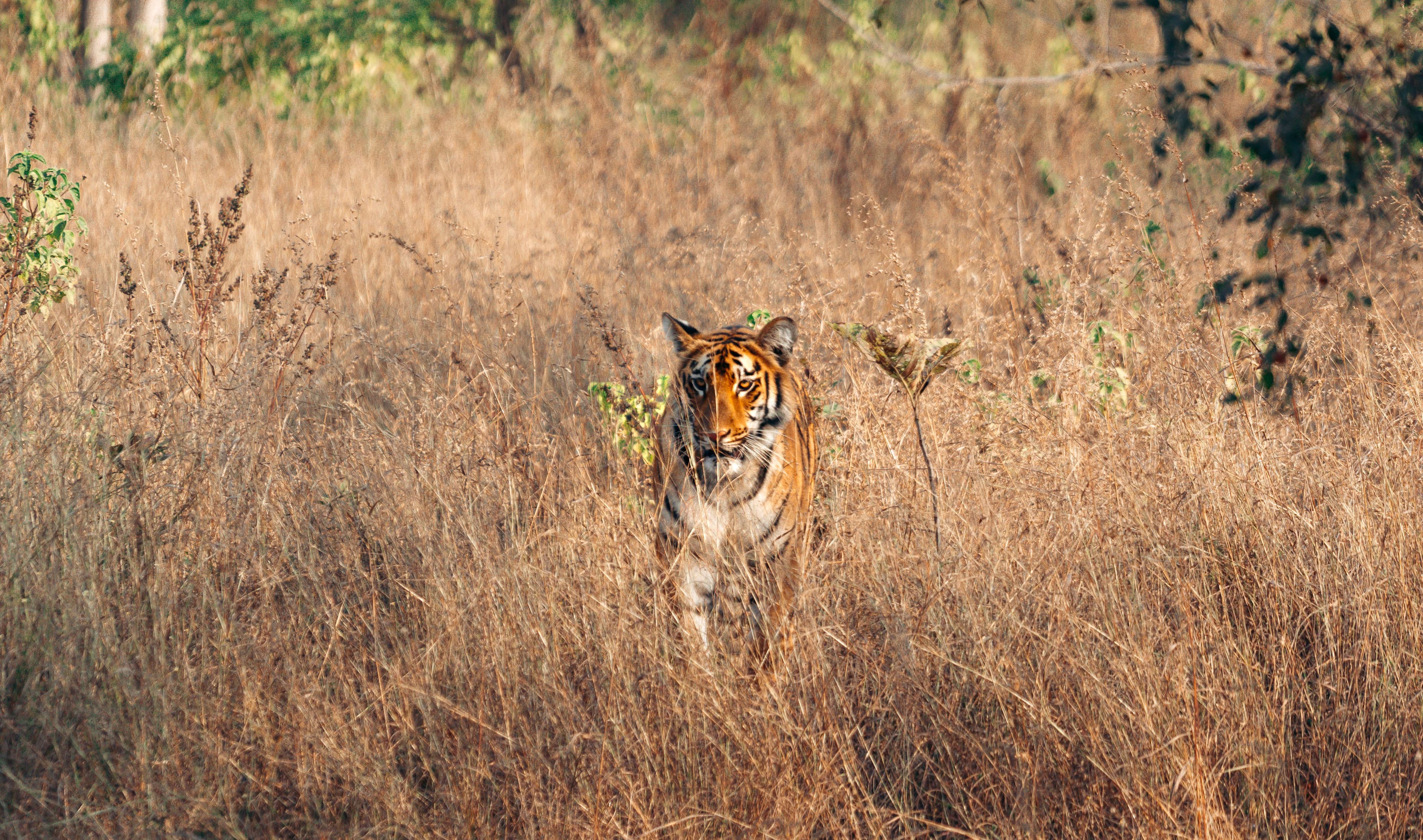
Beyond the lake dynasty and the Noor line runs a third thread in Ranthambore's pedigree — the Gilai Sagar family — and one of its most productive mothers was Husn Ara, coded T-30. Her name means "adorned with beauty," and while she never had the safari-celebrity of a Machhli, she did something arguably more important for the park's future: she raised litter after litter, seeding the Zone 2–3 country and beyond with tigers who became names in their own right.
Daughter of Gilai Sagar
Husn Ara was a daughter of the Gilai Sagar female (T-27), the matriarch whose descendants spread across the northern and central reaches of the reserve. T-30 established herself in the Zone 2–3 country, the transitional ground between the fort ridges and the open valleys, and set about the business a healthy territorial tigress exists for — producing and raising cubs across multiple litters.
A Prolific Mother
Husn Ara's contribution to the park is best read through her offspring. Her first litter included the male Hamir (T-33), named for the Chauhan king of Ranthambore Fort. A later litter produced a trio that guides of the 2010s knew well — Fateh (T-42), named in tribute to the legendary conservationist Fateh Singh Rathore who helped save Ranthambore; Surzan (T-43); and T-44. Few tigresses of her generation put as many cubs into the landscape, and through them her genes threaded into several corners of the reserve.
That kind of reproductive success is the real engine of a recovering tiger population. The dramatic sightings make the headlines, but it is prolific, competent mothers like Husn Ara — and Sultana (T-107) in the present day — who actually rebuild numbers, one raised litter at a time.
The Gilai Sagar Dynasty
The Gilai Sagar line is less tidily documented than the lake dynasty, and some of its branches are recorded differently across sources — which is why, on our tiger family tree, we place Husn Ara firmly under her mother T-27 while flagging the more loosely-sourced connections around tigers like Gandri (T-99) and Aves (T-104) as unverified. Getting the confident links right and honestly marking the uncertain ones is how a family tree stays trustworthy rather than just comprehensive.
Husn Ara's era has passed, but her descendants and the wider Gilai Sagar branch remain part of the genetic mix that gives Ranthambore's roughly 81 tigers their diversity — an insurance policy that matters as much as raw numbers to the biologists who advise Project Tiger.
Frequently Asked Questions
Who was Husn Ara (T-30)?
A prolific breeding tigress of Ranthambore's Zone 2–3 country, a daughter of the Gilai Sagar female (T-27), known for raising several well-documented litters.
Which famous tigers were Husn Ara's cubs?
Her offspring included Hamir (T-33) from her first litter, and Fateh (T-42), Surzan (T-43) and T-44 from a later litter.
What does her name mean?
"Husn Ara" translates roughly as "adorned with beauty" — one of the more lyrical names in the park's records, in the Persian-Urdu naming tradition also seen in tigers like Noor.
Is the Gilai Sagar line related to the lake dynasty?
They are separate branches of Ranthambore's tiger population. The lake dynasty descends from Machhli (T-16); the Gilai Sagar line descends from T-27. See the tiger family tree for how the branches sit side by side.
Similar Articles
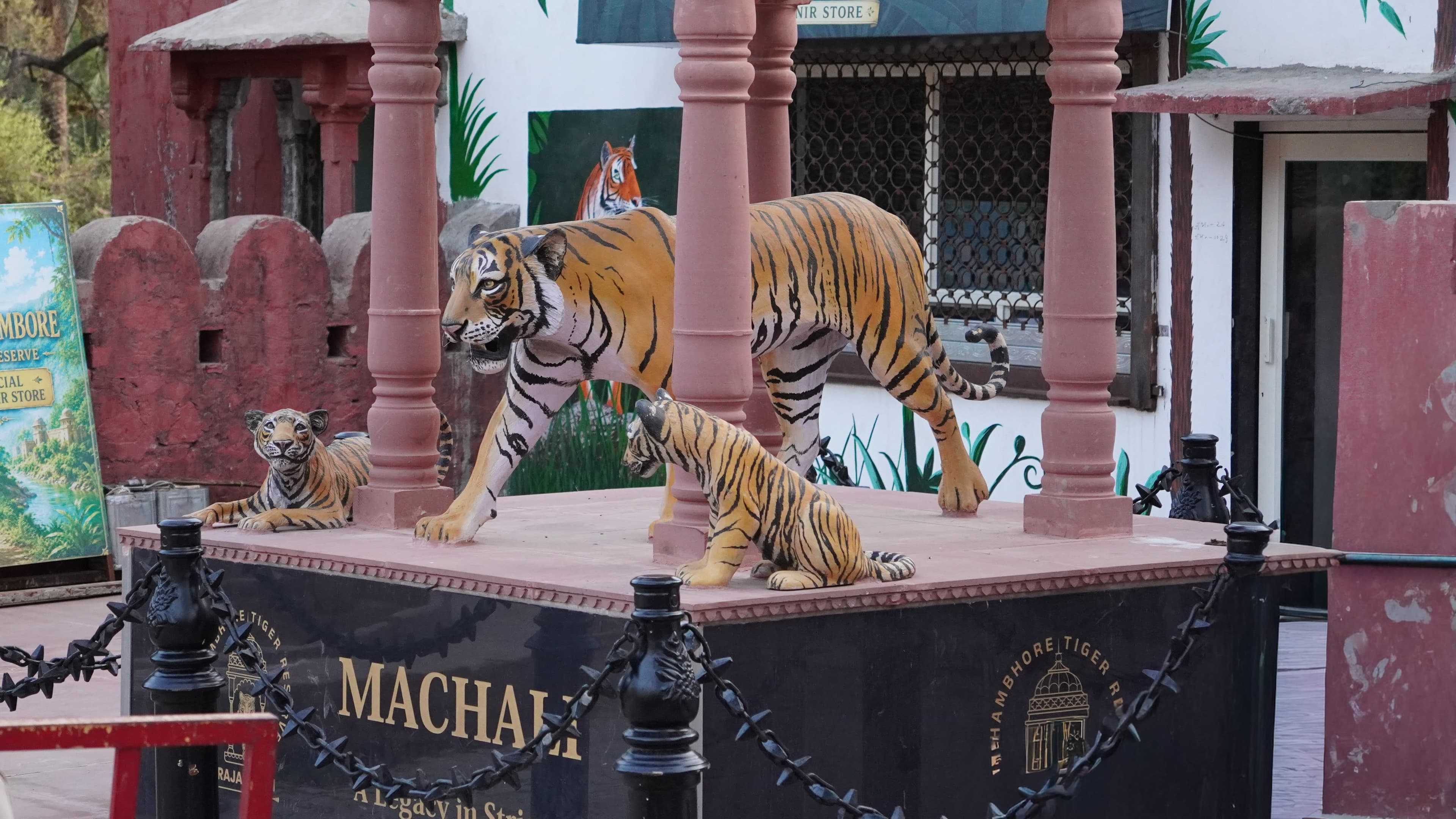
Machli (T-16) — The Tiger Queen of Ranthambore
Discover the captivating story of Machhli (T-16), Ranthambore’s most famous tigress. Known as the "Crocodile Killer" and "Queen of the Jungle," her fierce spirit, legendary battles, and extraordinary legacy redefined the wilderness of India.
Is really Ustad (T-24) a Man-Eater?
Was Ustad (T-24) truly India's most feared man-eater, or was he a wild tiger caught in the growing conflict between greedy human and nature? Unearth the story behind one of Ranthambore's most controversial legends.
Aurangzeb (T-57) — The Male Behind Ranthambore's Zone 1 Cubs
Aurangzeb (T-57), also recorded as Singhasth, was a dominant Ranthambore male who fathered Noor's 2016 litter — including Sultana. He did not, despite the myth, father Riddhi and Siddhi.
Ganesh (T-120) 'Charger' — The King of Ranthambore's Lakes
Ganesh (T-120), the mock-charging male of Zones 3–4, is Riddhi's mate, father of Shubh and the 2026 cubs — and, through his mother Chanda, a great-great-grandson of Machhli himself.
Kachida Female (T-5) — The Tigress Behind a Conservation Miracle
Kachida Female (T-5) died young in 2011, orphaning two tiny cubs — but her death set up the most extraordinary tiger story ever recorded at Ranthambore, and rebuilt a whole reserve.