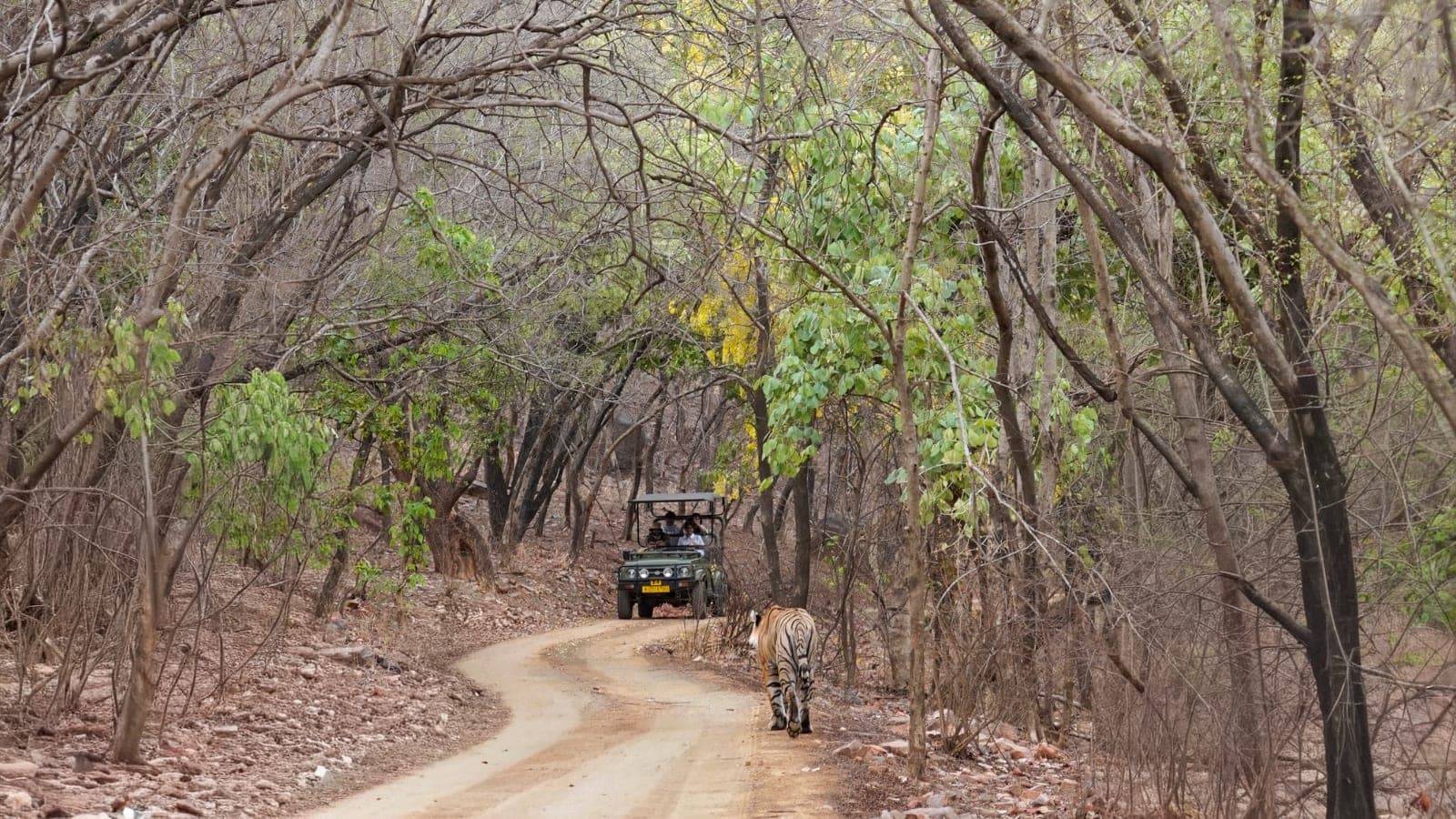
Shubh — known by his Forest Department code T-2505 — is the most charismatic young male tiger in Ranthambore National Park today: a bold, photogenic sub-adult who carries in his blood the most celebrated dynasty in Indian wildlife. The son of the reigning lake queen Riddhi (T-124) and a direct descendant of the immortal Machli, Shubh and his brother Labh have grown up before the cameras of thousands of safari visitors, prowling the lakes, ruins and dhok forests of the park's central zones. This is the story of a tiger born to royalty — and of how you can see him in the wild.
A Tiger Born to a Dynasty
To understand Shubh, you must first understand the bloodline he was born into — arguably the most documented tiger family on earth. The story begins with Machli (T-16), the "Lady of the Lakes," who reigned over Ranthambore's lakeside heartland for more than a decade and became, in the words of NBC News, "one of the world's most photographed tigers and the oldest female tiger living in the wild" before her death on 18 August 2016 at the age of 19.
From Machli the crown passed down the female line, generation after generation, each daughter inheriting the same coveted territory around the park's three great lakes. Machli's daughter Krishna (T-19) took the lakes; Krishna's daughter Arrowhead (T-84) took them in turn; and Arrowhead's daughter Riddhi (T-124) — Shubh's mother — is the current "Queen of Ranthambore." That makes the line Machli → Krishna → Arrowhead → Riddhi → Shubh, placing Shubh in the latest generation of a direct matrilineal succession, and the newest heir to a throne that has stayed in one family for nearly thirty years.
It is worth a small note on lineage terminology, because popular sources sometimes blur it: Arrowhead is properly Machli's granddaughter (through Krishna), which makes Riddhi Machli's great-granddaughter, and Shubh her great-great-grandson. Whichever way it is counted, the essential truth is the same — Shubh belongs to the unbroken royal bloodline of the lakes.
Riddhi, the Reigning Queen — and Shubh's Mother
Shubh's mother, Riddhi (T-124), was born around late 2018 to Arrowhead and first sighted as a cub in Zone 3 on 2 January 2019. From an early age she showed the audacity that would define her, even clashing with her own mother Arrowhead over territory and waging a long, sometimes bloody rivalry with her sister Siddhi (T-125) for control of the lakes. Riddhi won. Today she rules the prime habitat around Padam Talao, Rajbagh and Malik Talao in Zones 3 and 4 — the same waters Machli once commanded — and is celebrated as one of the most photographed and confident tigresses in India.
Riddhi inherited more than territory; she inherited the family's legendary hunting skill. Like her great-great-grandmother Machli and her mother Arrowhead before her, Riddhi has been filmed taking on crocodiles in the lakes, a feat rare among wild tigers. It was into this world of water, ruins and royal hunting that Shubh was born.
The Birth of Shubh and Labh
Shubh and his siblings were born to Riddhi around late May 2023, fathered by the powerful dominant male of the lake area, Charger (T-120). The cubs were first sighted in Zone 3's morning shift on Wednesday, 21 June 2023, per the Rajasthan Forest Department (via Ranthambhore National Park), which reported that "tourists have seen tigresses shifting while holding their cubs in their mouths" — Riddhi moving them one by one away from the crocodile-infested shallows to safer ground in those dangerous first weeks.
The litter numbered three — two males and a female. The two brothers, inseparable since cubhood, were given the names Shubh and Labh, and the new four-digit Forest Department codes assigned to Riddhi's cubs are T-2504, T-2505 and T-2506. Shubh is identified as T-2505 and his brother Labh as T-2506.
What's in a Name? The Meaning of Shubh and Labh
The naming of these two brothers is one of the most charming and culturally resonant stories in modern Ranthambore — and it is no accident. In Hindu tradition, Shubh and Labh are the two sons of Lord Ganesha. Shubh means "auspiciousness" or "goodness," and Labh means "profit" or "gain." Their names are written on either side of doorways across India at Diwali, an invocation that whatever crosses the threshold may be both auspicious and fruitful.
Crucially, in the scriptures Ganesha's two consorts are named Riddhi (prosperity) and Siddhi (accomplishment) — the very same names borne by Shubh's mother Riddhi (T-124) and his aunt Siddhi (T-125). And the cubs' father, Charger (T-120), is widely nicknamed "Ganesh." So when the guides and naturalists of Ranthambore named Riddhi and Ganesh's two sons Shubh and Labh, they were completing the divine family on the forest floor exactly as it appears in mythology.
There is an even deeper local resonance. Inside Ranthambore Fort, perched above the very jungle these tigers roam, stands the Trinetra Ganesh Temple — built in 1300 AD by King Hammir Dev Chauhan and believed, per the temple's own sources, to be the only temple in the world where Ganesha resides with his complete family: the three-eyed deity with his consorts Riddhi and Siddhi and his sons Shubh and Labh. The tigers of the lake, it turns out, share their names with the gods who watch over the fort above them.
Territory: Where Shubh Roams
Shubh has spent his whole life in the scenic heart of Ranthambore — the central lake zones that form the park's most coveted real estate. As a cub he stayed close to Riddhi around Padam Talao, Rajbagh Lake and Malik Talao in Zones 3 and 4, the picturesque belt of open water, grassland and crumbling ruins watched over by the silhouette of Ranthambore Fort. As he has grown into a bold sub-adult, his range has expanded, and Riddhi's family has been tracked moving across Zones 2, 3, 4 and 5 as the youngsters push at the edges of their parents' domain.
This central landscape is the most cinematic in the park. Zone 3 is built around Padam Talao — the largest lake in Ranthambore, named for the lotus (padma) that blooms in its waters — with the historic Jogi Mahal hunting lodge on its banks and the Rajbagh ruins between the lakes. It is the most photographed zone in the park, prized for the chance to frame a tiger against ancient stone and shining water. Zone 4, rockier and more thickly wooded, was Machli's old stronghold. For a tiger of Shubh's bloodline, it is exactly the right inheritance.
Personality: The "Ranthambore Attitude"
What has made Shubh a favourite of wildlife photographers is not just his pedigree but his temperament. Ranthambore's tigers are famous for being unusually bold and active in daylight — habituated to safari vehicles over generations — and Shubh embodies this "Ranthambore attitude" completely. He is confident, curious and strikingly relaxed around jeeps and canters, often appearing in good light against the park's most photogenic backdrops of ruins, lake edges and golden grass.
Shubh and Labh are frequently seen together, and watching the two brothers patrol, spar and laze side by side has been one of the great pleasures of recent Ranthambore seasons. As of 2026 the brothers are roughly three years old — fully grown young males at the critical, dramatic stage of dispersal, when sub-adults begin testing their father's dominance and seeking territory of their own. Naturalists who tracked the family through the 2025–26 season described the two boys ranging between Zones 2 and 5, increasingly at odds with their father Charger and pushed to the fringes of his territory as Riddhi grows less tolerant of their presence — the timeless, bittersweet rhythm by which one tiger generation makes way for the next.
This is, in other words, the most exciting possible time to look for Shubh: a young prince on the cusp of carving out his own kingdom.
A Family Marked by Triumph and Loss
Shubh's story unfolds against a poignant backdrop. His grandmother Arrowhead (T-84) — herself one of Ranthambore's most beloved tigresses and a famed crocodile hunter — died on 19 June 2025 at the age of 11 after a prolonged battle with bone cancer. As the Ranthambore National Park official account put it: "Tigress Arrowhead (T-84), the pride of our forest… has passed away. She had been bravely battling bone cancer for a long time." She died near Jogi Mahal, in the heart of the territory her family had ruled for generations — and just hours after one of her last-litter cubs (RBT 2507) was relocated to Mukundra. Her death was widely mourned as the end of an era.
The wider family has also felt the strain of Ranthambore's own success. The reserve held 77 tigers in 2024 (up from 57 in 2017) against an ideal capacity of around 56; as CCF Anup K.R. told ETV Bharat, "The reserve has a capacity for around 56 tigers within its 392-square-kilometer area. Currently, we have about 21 more tigers than the ideal population." To ease this pressure, the National Tiger Conservation Authority approved shifting six tigers out of Ranthambore — two each to Mukundra Hills, Sariska and Ramgarh Vishdhari; among them, the young male T-2408 ("Big Boy") was translocated to Mukundra Hills on 9 January 2026. That Shubh and Labh have remained in the park's prime tourist zones, sighted and photographed through 2025 and into 2026, makes every encounter with them feel precious.
Planning Your Safari to See Shubh
Seeing Shubh in the wild is a realistic goal if you plan well — he lives in the most accessible and most-watched zones in the park. Here is how to give yourself the best chance.
Which Zones to Request
Shubh's family centres on Zones 3 and 4, with movement into Zones 2 and 5. If you can express a preference, prioritise Zones 3 and 4 — Zone 3 (Padam Talao, Rajbagh, Jogi Mahal) is widely rated the single best and most scenic zone for lake-area tiger sightings, and Zone 4 (Malik Talao, Machli's old terrain) is a close second. Zone 2 is also excellent and shares its boundaries with the lake belt. Note that under the current system zones are largely allotted by the Forest Department, so booking multiple safaris across several shifts dramatically improves your odds of drawing a core zone.
The Future of the Lake Dynasty
Shubh stands at a threshold of his own — as auspicious and uncertain as his name suggests. As a dispersing young male he faces the hardest chapter of any tiger's life: the search for territory, the inevitable confrontations, the long odds that every wild tiger must beat. Whether he carves out a kingdom within Ranthambore or ranges beyond it, he carries forward the genes of Machli herself, and the hopes of everyone who has watched his family for generations.
For now, the young prince of the lakes still walks the shores his ancestors ruled, framed by ruins and water and the great fort above. To see Shubh on safari is to witness a living link in the most storied tiger lineage on earth — and to glimpse the future of Ranthambore itself.
Note on sourcing: The four-digit codes T-2504, T-2505 and T-2506 are well documented as the Forest Department designations for Riddhi's three 2023 cubs, and the names Shubh and Labh are established in local naming following the Riddhi–Siddhi–Ganesh tradition. The precise mapping of the name "Shubh" specifically to T-2505 (and "Labh" to T-2506) is used here as commonly attributed by guides and the wider Ranthambore community, but is not yet confirmed in an official Forest Department document; visitors keen on exact individual identification should confirm with their naturalist on the day. Riddhi's birth year is given by different sources as 2018 or 2019, and this litter is sometimes called her first and sometimes her second (an earlier 2022 cub did not survive). As with all wild tigers, sightings can never be guaranteed.
Frequently Asked Questions
Which zones give the best chance of seeing Shubh?
Shubh's family centres on Zones 3 and 4, with occasional movement into Zones 2 and 5 — request these zones when booking your safari permit for the best odds.
Who are Shubh's parents?
His mother is Riddhi (T-124), a descendant of the legendary Machli's lake-territory bloodline, and his father is Charger (T-120), the dominant male of the lake area.
Why are Shubh and Labh named after Ganesha?
Riddhi and Siddhi are the names of Lord Ganesha's two consorts in Hindu tradition, and Shubh-Labh are twin blessings associated with him — a naming choice that resonates with the Trinetra Ganesh Temple inside Ranthambore Fort, overlooking the very territory this tiger family occupies.
Similar Articles
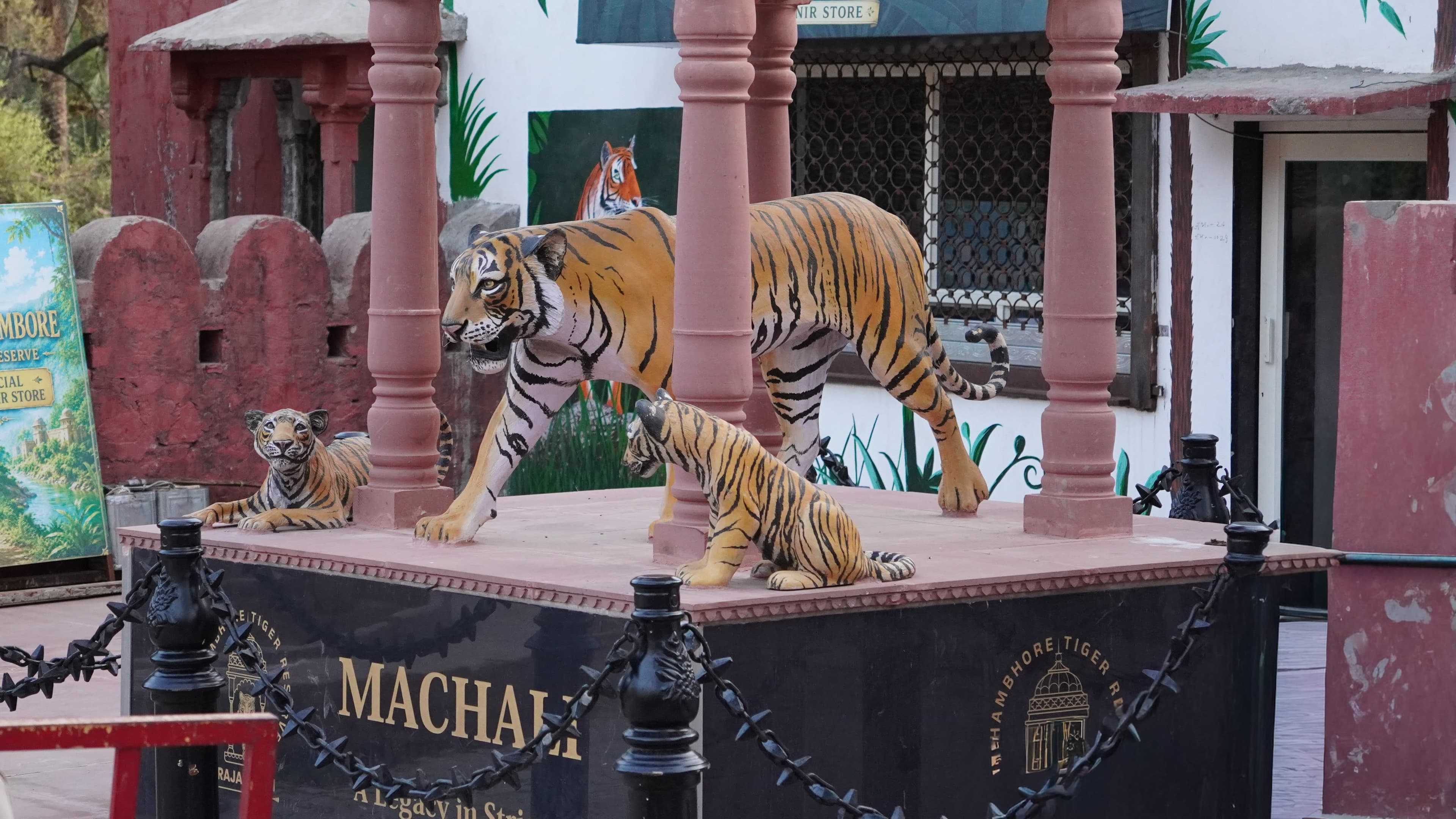
Machli (T-16) — The Tiger Queen of Ranthambore
Discover the captivating story of Machhli (T-16), Ranthambore’s most famous tigress. Known as the "Crocodile Killer" and "Queen of the Jungle," her fierce spirit, legendary battles, and extraordinary legacy redefined the wilderness of India.
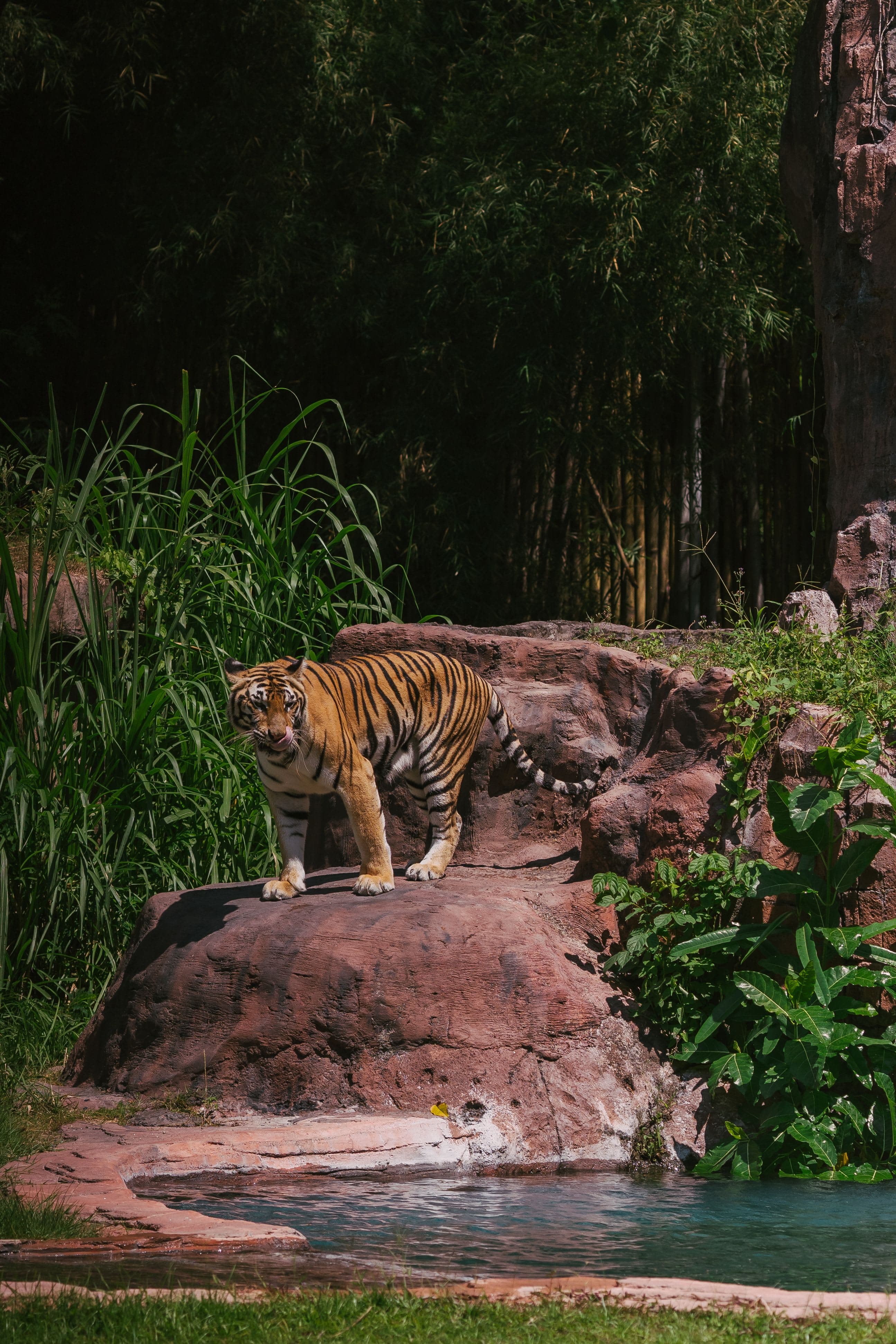
Is really Ustad (T-24) a Man-Eater?
Was Ustad (T-24) truly India's most feared man-eater, or was he a wild tiger caught in the growing conflict between greedy human and nature? Unearth the story behind one of Ranthambore's most controversial legends.
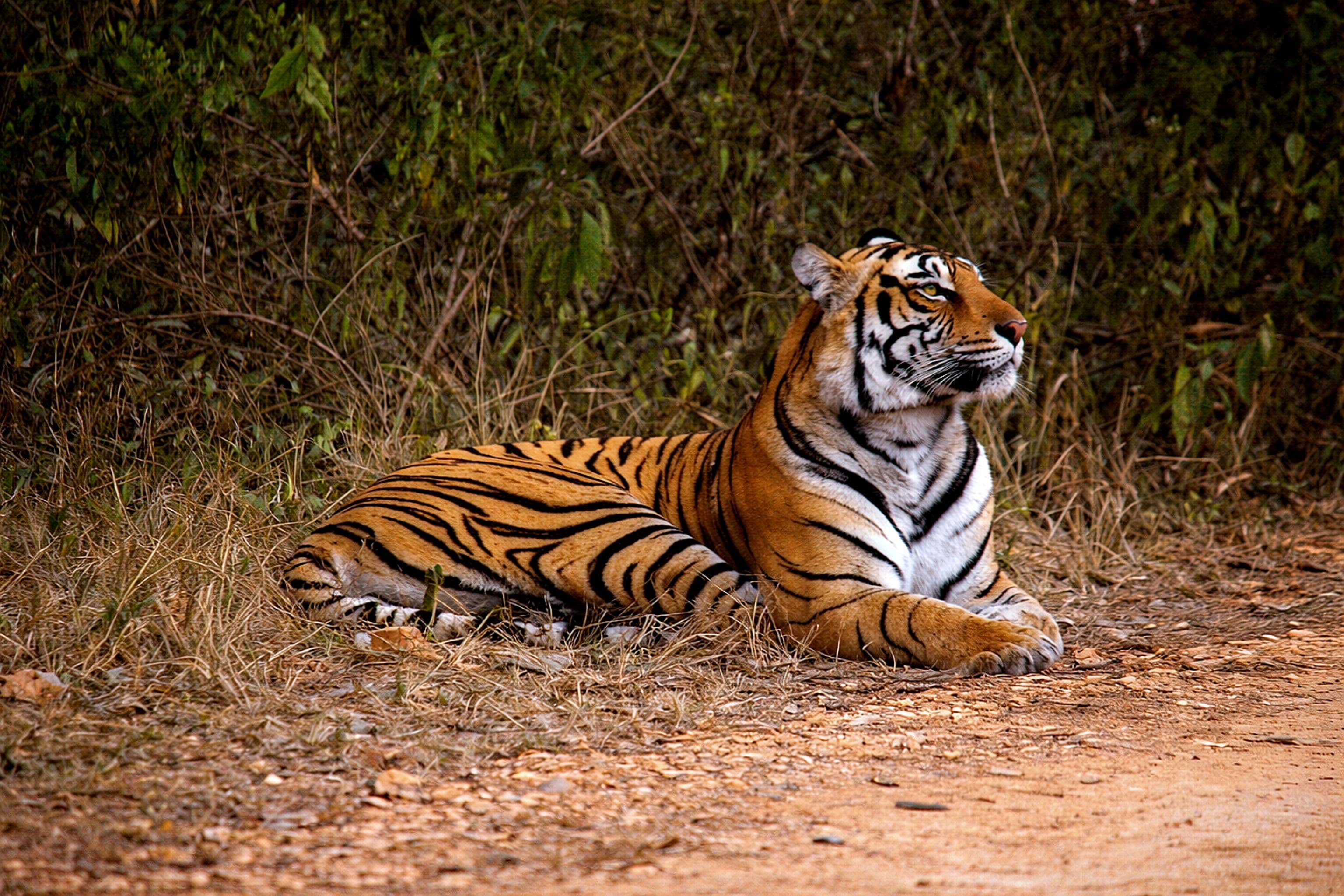
Aurangzeb (T-57) — The Male Behind Ranthambore's Zone 1 Cubs
Aurangzeb (T-57), also recorded as Singhasth, was a dominant Ranthambore male who fathered Noor's 2016 litter — including Sultana. He did not, despite the myth, father Riddhi and Siddhi.
Ganesh (T-120) 'Charger' — The King of Ranthambore's Lakes
Ganesh (T-120), the mock-charging male of Zones 3–4, is Riddhi's mate, father of Shubh and the 2026 cubs — and, through his mother Chanda, a great-great-grandson of Machhli himself.
Husn Ara (T-30) — Matriarch of the Gilai Sagar Line
Husn Ara (T-30), a prolific tigress of the Gilai Sagar dynasty, mothered a string of well-known Ranthambore tigers including Hamir (T-33), Fateh (T-42) and Surzan (T-43).