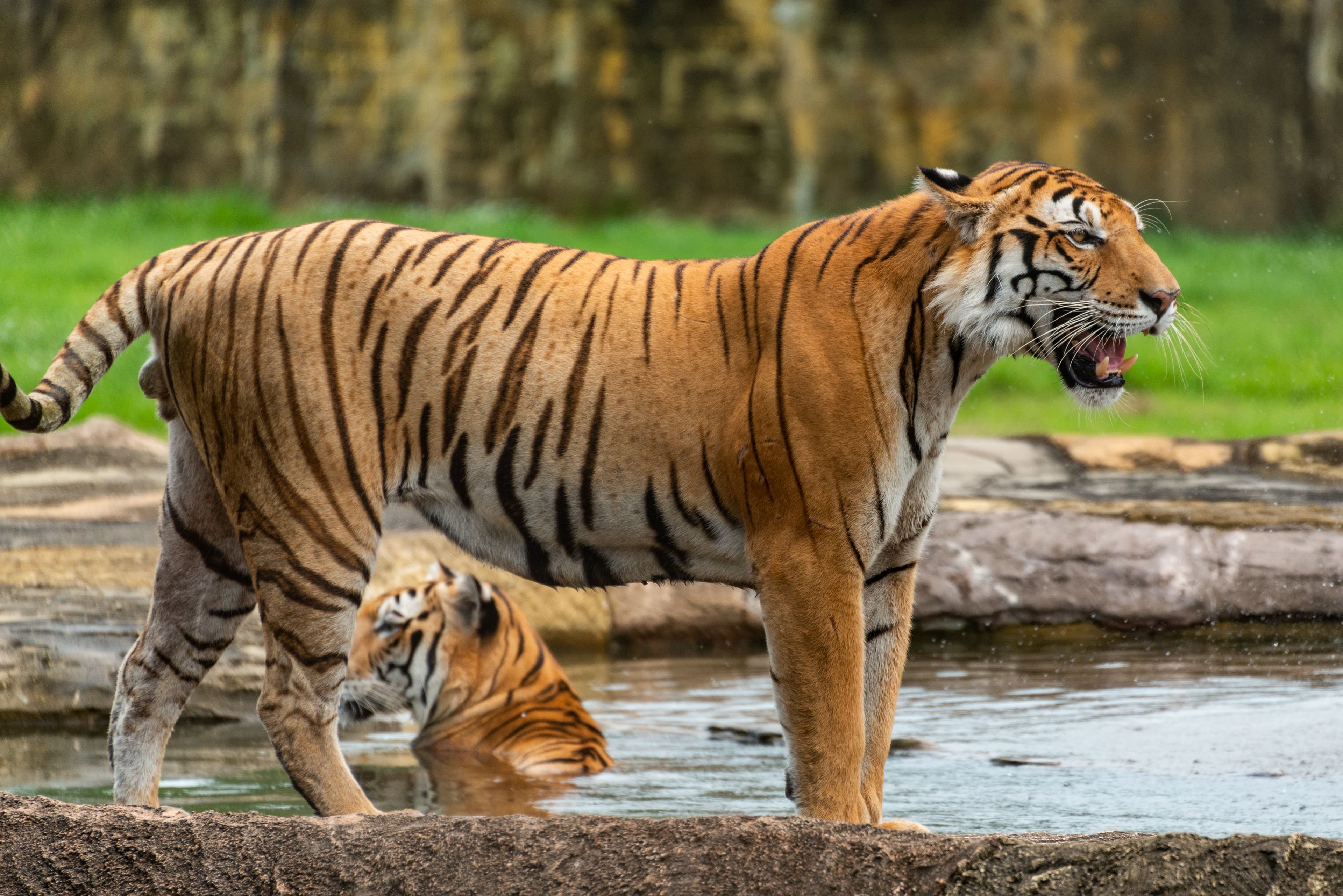
Some tigers become famous for how they lived. Kachida Female, coded T-5, became important for what happened after she died. A tigress of the rugged Kachida valley on Ranthambore's southern side, she succumbed to an intestinal illness in February 2011, leaving behind two cubs barely five months old. What followed — their own father raising them alone, and their eventual role in reviving a collapsed reserve — is one of the landmark stories of Indian tiger conservation, and it begins with her.
Queen of the Kachida Valley
T-5 held territory in the Kachida valley and the broken, boulder-strewn country of what are today Zones 6 to 8 — harder ground than the celebrated lakes, dry and steep, where a tigress earns every meal. She was a capable mother; her earlier litter included the well-loved tigress Ladli (T-8), who went on to rule Zones 6–8 in her own right. By the standards of the park's arid southern zones, T-5 ran a successful territory.
Her final litter, born around 2010 and fathered by Dollar (T-25), was two females — cubs the guides came to call Bina-1 and Bina-2. When T-5 died in February 2011, they were far too young to fend for themselves. In the ordinary course of nature they should have starved or fallen to predators within weeks.
The Death That Made History
They did not. Their father, the male Dollar, did something never before documented in a wild tiger: he stayed with the orphaned cubs, shared his kills, and effectively raised them himself over the next two years — behaviour so far outside the textbook that it drew researchers and filmmakers to the park. You can read the full account in our profile of Dollar (T-25); the point here is that none of it happens without T-5's death creating the crisis that Dollar, astonishingly, resolved.
In January 2013 the two sisters — by then healthy young tigresses — were relocated to Sariska Tiger Reserve and renamed ST-9 and ST-10. Sariska had lost every last tiger to poaching by 2004–05, a national scandal that reshaped Indian wildlife policy. The daughters of the Kachida female became founding mothers of the rebuilt Sariska population, and their descendants form a meaningful share of that reserve's tigers today — a recovery documented by the National Tiger Conservation Authority.
A Quiet Tigress, a Long Shadow
T-5 herself was never a safari celebrity; the Kachida valley sees fewer vehicles than the lakes, and she died before the smartphone-and-social-media era made every Ranthambore tiger a personality. But trace the consequences and her line runs remarkably wide — Ladli's descendants in Ranthambore's southern zones, and an entire branch of the Sariska population two hundred kilometres away. On our tiger family tree she anchors the Kachida valley line, proof that a tigress's importance is not always measured in sightings.
Frequently Asked Questions
How did the Kachida Female (T-5) die?
Of an intestinal illness in February 2011, while her final litter of two female cubs was only about five months old.
What happened to her orphaned cubs?
Their father, Dollar (T-25), raised them — unprecedented for a wild male tiger. In 2013 the two sisters were relocated to Sariska Tiger Reserve as ST-9 and ST-10, where they became founding mothers of the recovering population.
Was Ladli (T-8) also her cub?
Yes — Ladli was from an earlier litter of T-5 and became a dominant tigress of Zones 6–8. She is often wrongly listed elsewhere as the mother of Packman (T-85), who was actually Krishna's son.
Where was T-5's territory?
The Kachida valley and the southern zones (today's Zones 6–8), a drier, more rugged part of the reserve than the famous lake circuit.
Similar Articles
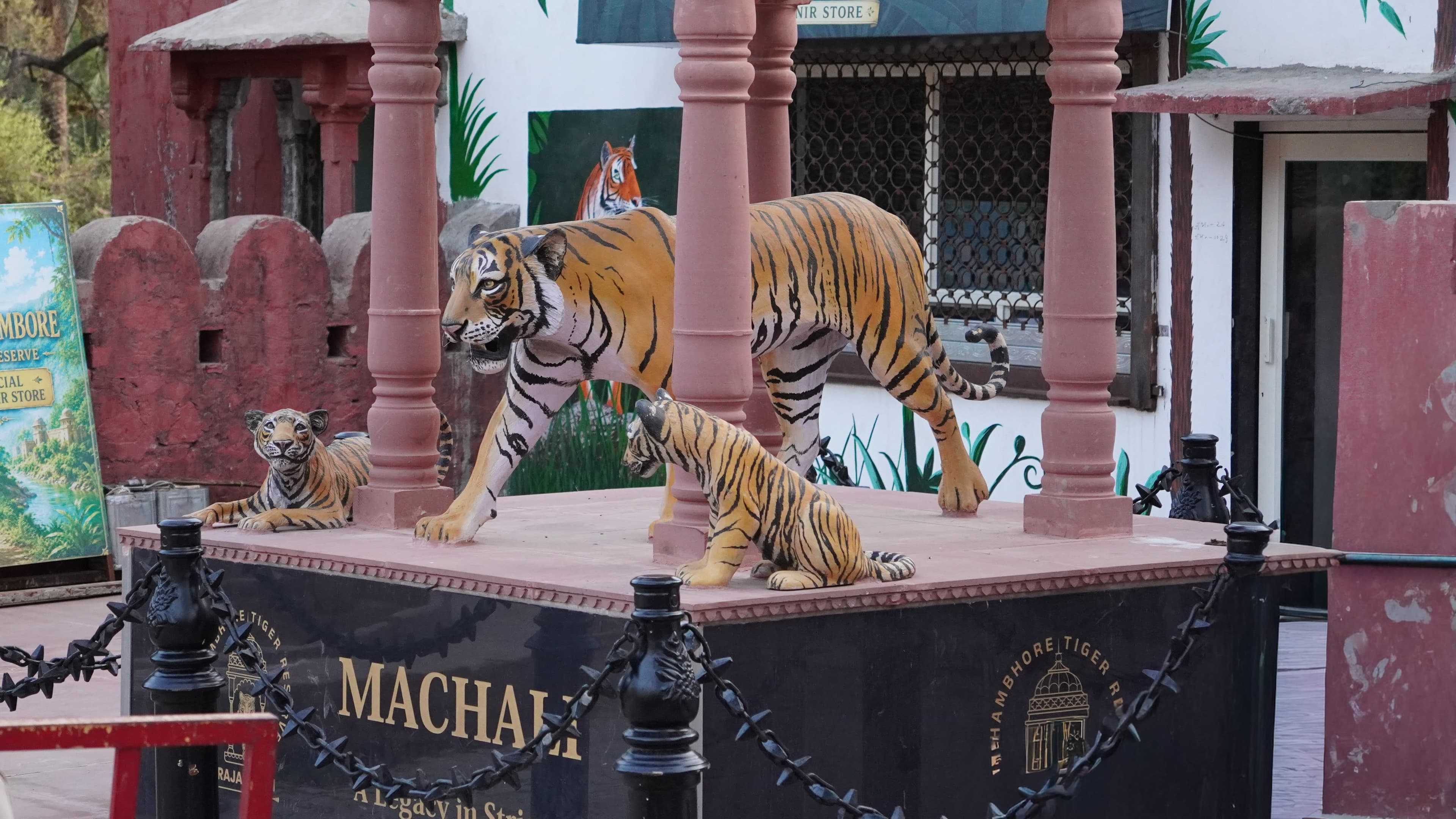
Machli (T-16) — The Tiger Queen of Ranthambore
Discover the captivating story of Machhli (T-16), Ranthambore’s most famous tigress. Known as the "Crocodile Killer" and "Queen of the Jungle," her fierce spirit, legendary battles, and extraordinary legacy redefined the wilderness of India.
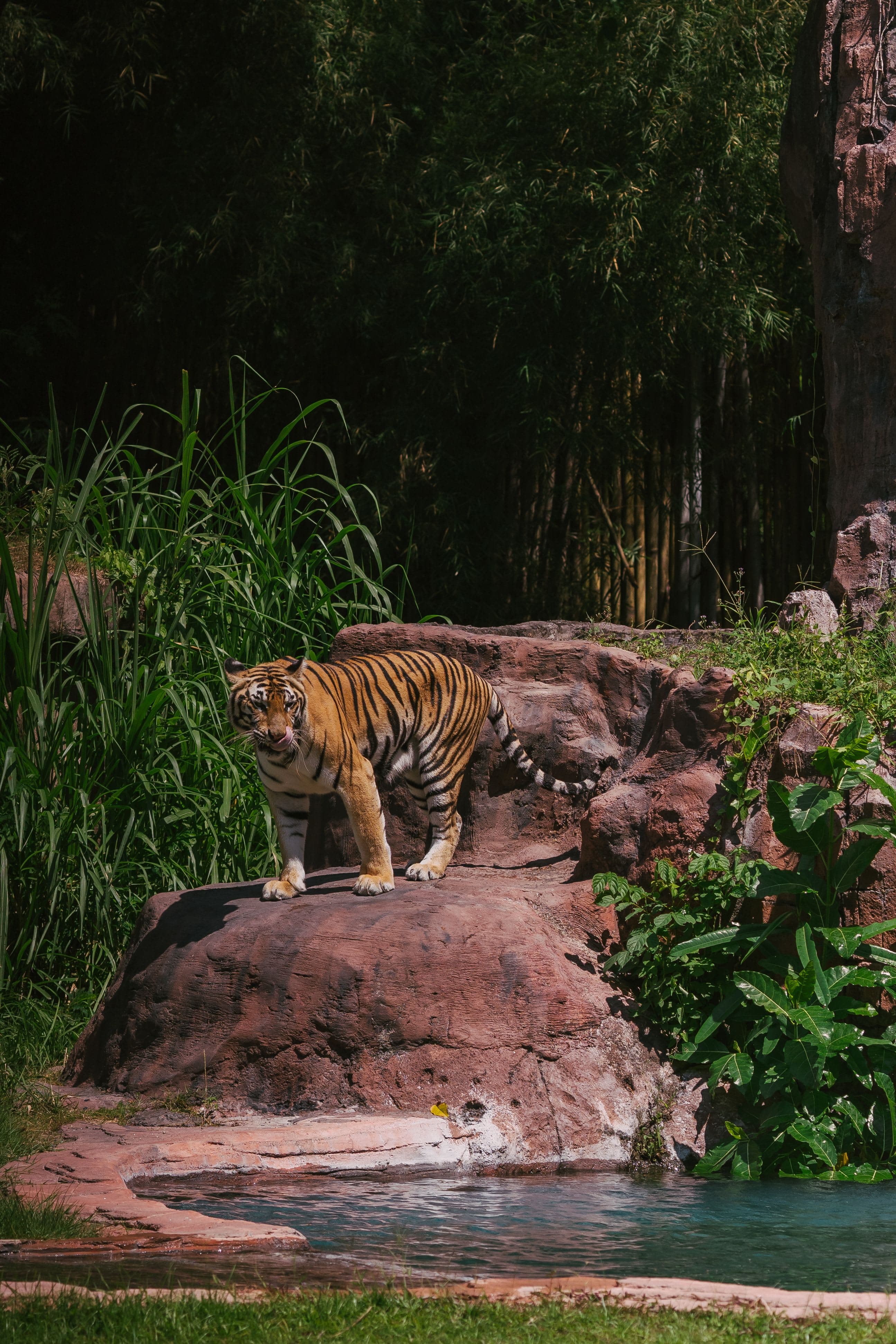
Is really Ustad (T-24) a Man-Eater?
Was Ustad (T-24) truly India's most feared man-eater, or was he a wild tiger caught in the growing conflict between greedy human and nature? Unearth the story behind one of Ranthambore's most controversial legends.
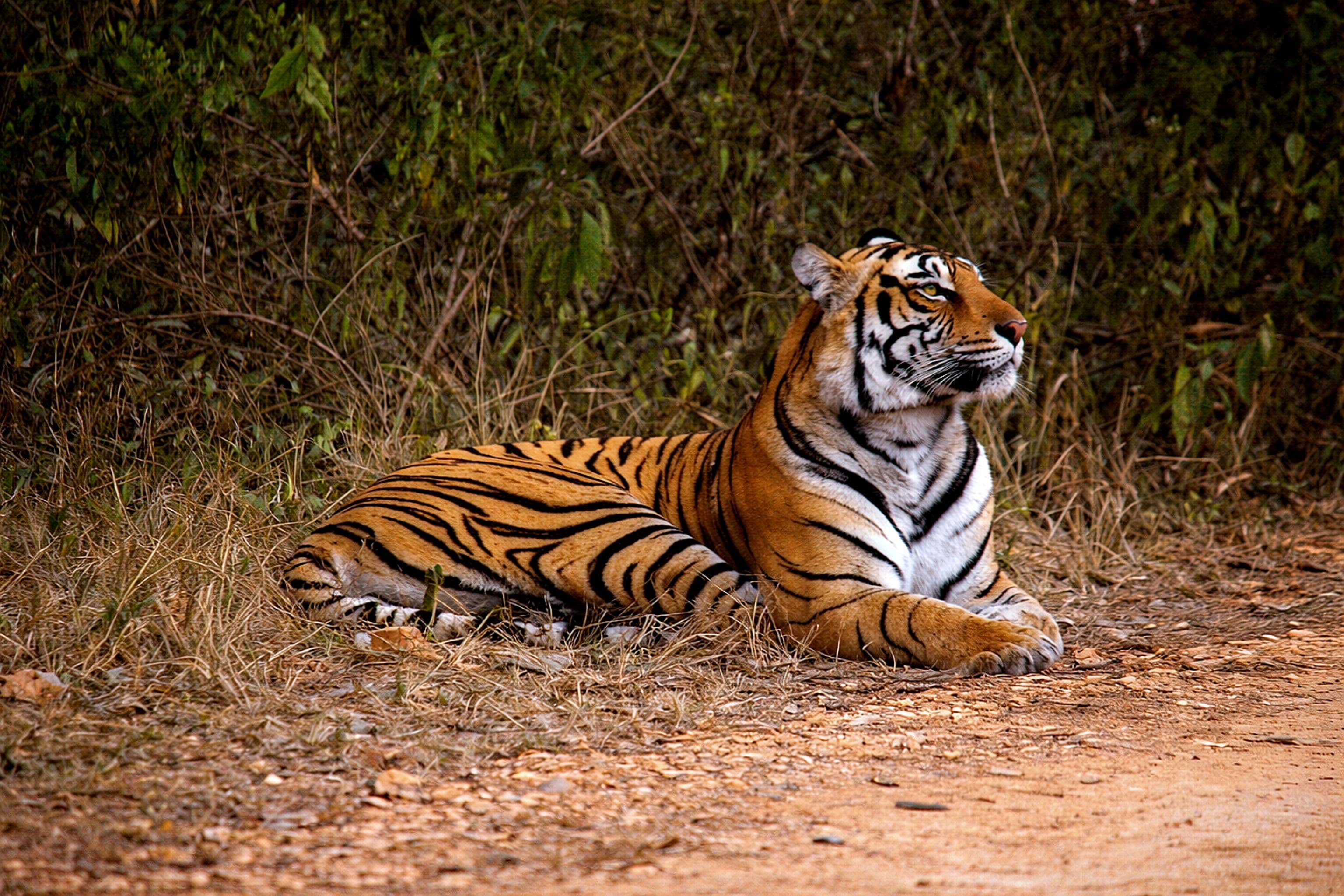
Aurangzeb (T-57) — The Male Behind Ranthambore's Zone 1 Cubs
Aurangzeb (T-57), also recorded as Singhasth, was a dominant Ranthambore male who fathered Noor's 2016 litter — including Sultana. He did not, despite the myth, father Riddhi and Siddhi.
Ganesh (T-120) 'Charger' — The King of Ranthambore's Lakes
Ganesh (T-120), the mock-charging male of Zones 3–4, is Riddhi's mate, father of Shubh and the 2026 cubs — and, through his mother Chanda, a great-great-grandson of Machhli himself.
Husn Ara (T-30) — Matriarch of the Gilai Sagar Line
Husn Ara (T-30), a prolific tigress of the Gilai Sagar dynasty, mothered a string of well-known Ranthambore tigers including Hamir (T-33), Fateh (T-42) and Surzan (T-43).