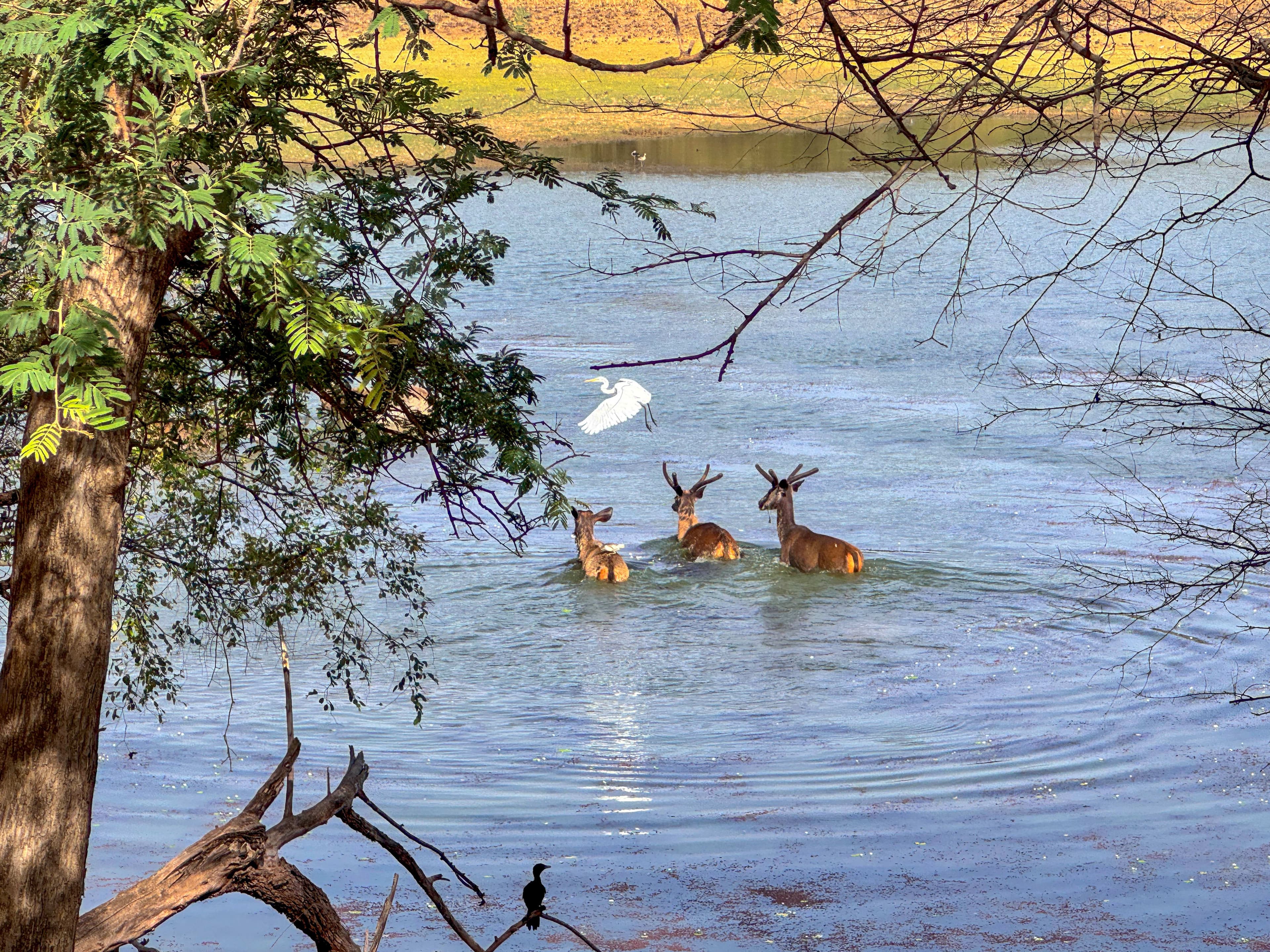
The flora of Ranthambore National Park is as captivating as its celebrated wildlife. Spread across the 1,411 square kilometres of the wider tiger reserve, the vegetation is classified as Northern Tropical Dry Deciduous Forest — a biome of trees that shed their leaves through the hot, dry summer and burst into green with the monsoon. More than 300 plant species have been documented here, and every one of the park's tigers ultimately depends on them.
The Dhok Tree: Backbone of the Forest
The most dominant and characteristic tree of Ranthambore is the Dhok (Anogeissus pendula), which covers the great majority of the park's hillsides and plateaus. Dhok is a hardy, drought-resistant species perfectly adapted to the thin, rocky soils of the Aravalli and Vindhya foothills. In the dry season its pale, peeling bark gives the ridgelines a silvery look; in the monsoon its canopy closes into a dense green umbrella. Its leaves are also a key browse for sambar, chital and nilgai — the prey base that feeds the park's tigers.
The Dhok forest creates ideal tiger habitat, providing dappled shade for resting and the structural cover tigers use when stalking. Its leaf litter supports an extraordinary variety of invertebrates, small mammals and ground-nesting birds.
Key Tree Species of Ranthambore
Beyond Dhok, Ranthambore supports a rich diversity of woody species. Banyan (Ficus benghalensis) and Peepal (Ficus religiosa) trees create cathedral-like groves around the temples and ruins — the enormous banyan beside Jogi Mahal, near the shore of Padam Talao, is celebrated as one of the largest in India. The Indian ghost tree or Kullu (Sterculia urens) stands out for its smooth, almost luminescent bark. Tendu (Diospyros melanoxylon), whose leaves traditionally wrap bidis, and Khair (Acacia catechu), source of catechu extract, are common in the drier zones.
Flame of the Forest (Butea monosperma) blazes brilliant orange across the hillsides between February and April, coinciding with the prime tiger-sighting season and creating some of the most dramatic wildlife photography backdrops in India. Mahua (Madhuca longifolia), the Indian butter tree, feeds sloth bears, deer, birds and local communities alike — bears gorging on fallen Mahua flowers is a classic spring sighting.
Grasslands, Wetlands and Aquatic Flora
Ranthambore's three major lakes — Padam Talao, Rajbagh Talao and Malik Talao — are fringed with lotus beds, water hyacinth and sedges. Padam Talao is literally named for its lotus blooms. These wetland margins are critical feeding habitat for marsh crocodiles, painted storks and herons, and the shorelines are where the park's tigers do much of their summer hunting as prey comes to drink.
The open grasslands, particularly in zones 3 and 5, support tall grasses including Saccharum and Sehima species — prime grazing for chital, sambar and nilgai, the prey species that in turn sustain the park's predators.
Medicinal and Cultural Plants
Many of Ranthambore's plants carry traditional medicinal value recognised in Ayurvedic practice. Arjun (Terminalia arjuna) has long been used for cardiac conditions, Amla (Phyllanthus emblica) is prized for its vitamin C, and Neem (Azadirachta indica) for its antibacterial properties. Communities in the buffer zones have maintained this plant knowledge for centuries, and ethnobotanical research here continues to document it.
Frequently Asked Questions
Why is the Dhok tree so important in Ranthambore?
Dhok (Anogeissus pendula) dominates the hillsides, feeds the deer that feed the tigers, and provides the dense, dappled cover tigers rely on for resting and stalking — it is effectively the structural backbone of the park's habitat.
When is the best time to see Ranthambore's flora in bloom?
February to April, when Flame of the Forest blazes orange across the hillsides — conveniently overlapping with prime tiger-sighting season as the rest of the vegetation thins out. The lakes' lotus beds are at their best after the monsoon.
Where is the famous banyan tree in Ranthambore?
Beside Jogi Mahal, near Padam Talao in the park's core. It is regarded as one of the largest banyan trees in India, its canopy spreading over a web of aerial roots.
Similar Articles
Caracal in Ranthambore: India's Rarest Cat Is Growing
The caracal is India's rarest wild cat — and its numbers are growing in Ranthambore, now home to around 35. Meet the tufted 'cat of kings' and how to spot one.
How Many Tigers Are in Ranthambore? Population 2026
How many tigers are in Ranthambore? Around 80 in the reserve as of 2025, with 55–60 in the safari zones. Why quoted counts differ — and your sighting odds.
Animals of Ranthambore National Park: Full Wildlife List
Full animals list for Ranthambore National Park: tigers, leopards, sloth bears, hyenas, crocodiles and 40+ mammal species — plus the zones to see them in.
Birds of Ranthambore: Species, Best Zones & Season
Birds of Ranthambore: 320+ recorded species, from painted storks to crested serpent eagles. The best zones, best season and what to look for on safari.
History of Ranthambore National Park: Full Timeline
History of Ranthambore National Park — from Rajput fort and royal tiger hunts to Project Tiger in 1973, the 2005 poaching crisis and today's recovery.