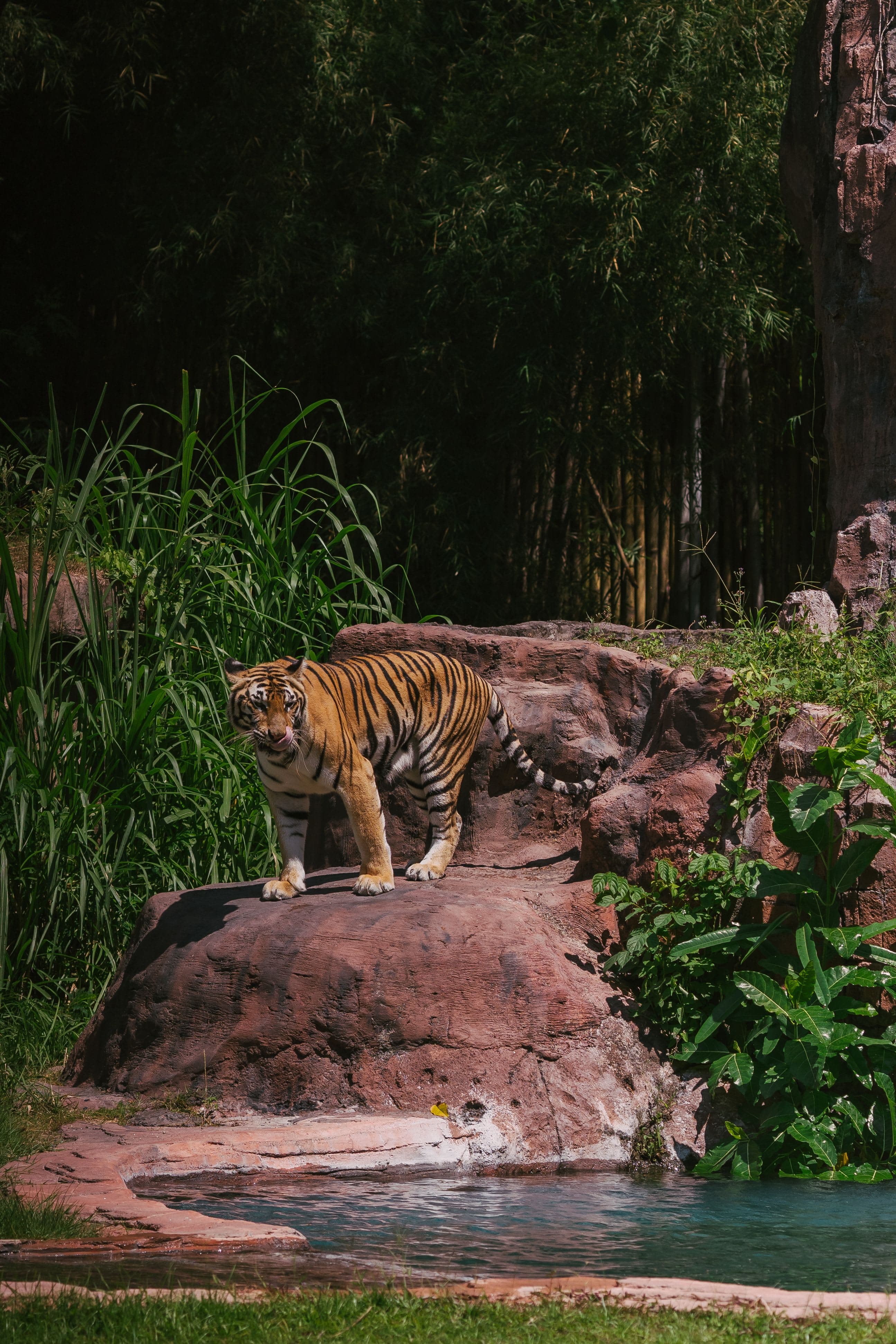
Deep within the rugged forests of Rajasthan lies Ranthambore National Park, a place where history and wilderness exist side by side. Ancient stone fortresses tower above valleys of golden grass, shimmering lakes reflect the harsh desert sun, and centuries-old watchtowers stand as silent reminders of kingdoms long gone. While these ruins once belonged to kings, a different kind of royalty rules this landscape today — the majestic Bengal tiger.
Over the years, Ranthambore has become home to some of India's most legendary tigers. The fearless Charger, the iconic Machli, the Queen of Ranthambore, and one name that continues to spark debate, fear, and fascination even years later: Ustad, officially known as T-24.
To some, he was India's most feared man-eater — a ruthless predator responsible for multiple human deaths. To others, he was a misunderstood tiger, punished for defending his territory in a forest increasingly shared with humans. His story is about far more than a single tiger. It is a powerful reminder of the fragile balance between people and wildlife.
The Rise of Ranthambore's Master
Born in the early 2000s, Ustad belonged to a new generation of tigers in Ranthambore. Even as a cub, he displayed qualities that made him stand out. While his siblings stayed close to their mother, Ustad often wandered farther, exploring the forest with unusual confidence. His fearless nature and piercing gaze hinted at the powerful ruler he would eventually become.
As he matured, Ustad established his territory around Ranthambore Fort and the park's famous lakes — one of the most valuable regions in the reserve. Rich in water, abundant in prey, and located along popular tourism routes, this territory was highly contested among tigers.
Tourists soon became familiar with him. Unlike many tigers that disappear into the dense forest at the slightest disturbance, Ustad often walked confidently across safari tracks, sometimes passing remarkably close to vehicles. His calm tolerance of human presence earned him the name "Ustad," which means "Master" in Hindi.
For more than a decade, he truly lived up to that title.
A Powerful and Dominant Tiger
Ustad was no ordinary tiger. His impressive size, muscular build, and aggressive nature made him one of Ranthambore's most dominant males. He successfully defended his territory against rivals, fathered cubs, and constantly patrolled his domain.
Visitors and forest staff admired his strength. He was frequently photographed walking along the ancient stone paths near Ranthambore Fort, almost as if he were guarding the centuries-old monument himself.
Yet the very confidence that made him so admired also made people uneasy.
Unlike other tigers that preferred staying deep inside the forest, Ustad regularly appeared near routes used by safari vehicles, guides, and villagers. His bold behavior gradually became the center of growing concern.
The Incidents That Changed Everything
In 2010, tragedy struck when a forest guard was found dead near Ustad's territory. Although the evidence was uncertain, suspicion quickly fell on T-24.
Over the following years, several more fatal incidents occurred. By 2015, four human deaths had been linked to Ustad, creating widespread fear throughout Ranthambore and the surrounding villages.
The most well-known incident took place in May 2015, when a respected forest guard, Ram Pal Saini, was mauled and killed near Ranthambore Fort. Witnesses reported that Ustad attacked suddenly before dragging him into the forest.
The incident shocked the nation.
Media outlets quickly labeled Ustad as a man-eater, villagers demanded immediate action, and tourists began questioning whether Ranthambore was still safe to visit.
Almost overnight, the tiger once admired as the ruler of Ranthambore became known as its most feared predator.
A Tiger at the Center of a National Debate
As fear spread, opinions became sharply divided.
Many believed Ustad had become a habitual man-eater and was too dangerous to remain in the wild. Others strongly disagreed.
Supporters argued that humans frequently entered tiger territory within Ranthambore and that Ustad may simply have been defending his domain after being startled or provoked. Some even questioned whether every incident attributed to him had actually been his responsibility.
Wildlife experts debated the evidence. Conservationists called for patience and a more detailed investigation, while villagers demanded protection for their communities.
At the same time, social media became flooded with petitions. Some called for Ustad's removal, while others urged authorities to let him remain free.
By then, Ustad had become far more than a tiger. He had become a symbol — of fear for some and of freedom for others.
The Capture of Ustad
In May 2015, the Rajasthan Forest Department reached its decision.
Declaring Ustad a threat to human life, officials ordered that he be tranquilized and removed from the wild.
Capturing such a large and powerful tiger was no easy task. Rangers carefully tracked him before finally darting and transporting him under heavy security.
As the vehicles carried him away from Ranthambore, the atmosphere was filled with mixed emotions. Some people felt relieved that the alleged man-eater had finally been removed. Others believed Ranthambore had lost one of its greatest tigers.
Instead of being relocated to another forest reserve, Ustad was transferred to Sajjangarh Biological Park in Udaipur. For a tiger that had once roamed vast forests, the move meant spending the rest of his life in captivity.
The decision immediately sparked widespread criticism. Conservationists accused authorities of giving in to public pressure and politics, while wildlife enthusiasts mourned what they saw as the loss of one of Ranthambore's greatest wild tigers.
Life Behind Fences
The contrast between Ustad's old and new life could not have been greater.
The tiger that had once ruled forests, lakes, and ancient forts now lived inside a confined enclosure. Reports described him as restless, aggressive, and visibly distressed.
The freedom to patrol his territory, hunt prey, and roam beneath the open sky had been replaced by fences, concrete surroundings, and visitors observing him from outside.
For many, it was a heartbreaking end to the life of one of India's most famous tigers.
The End of a Legend
In 2022, news broke that Ustad had died in captivity at around 17 years of age.
His final years passed quietly, but the legacy he left behind remained anything but quiet.
From respected ruler to feared outcast, from the forests of Ranthambore to an enclosure in Udaipur, Ustad's journey became one of the most controversial stories in India's wildlife history.
For villagers and forest officials, his removal represented a necessary step toward protecting human lives. For conservationists, however, Ustad became a symbol of something much larger — a wild animal punished simply for behaving like a wild tiger in an increasingly human-dominated landscape.
Was Ustad Really a Man-Eater?
Even today, there is no single answer.
Was Ustad truly a dangerous man-eater? Or was he a victim of circumstance, public fear, and growing human encroachment into tiger habitat?
The debate continues years after his death, proving that Ustad was never just another tiger. He became an enduring symbol of the complex relationship between humans and wildlife.
The Legacy of Ustad
Ustad's story forces us to confront difficult questions that remain relevant today.
When humans and tigers come into conflict, who is truly responsible? Is it the tiger defending the territory that has always been his? Or is it humans expanding ever deeper into wild landscapes?
India is home to more than half of the world's remaining wild tigers, yet their habitats continue to shrink as villages grow, roads cut through forests, and tourism increases. In such a world, can coexistence ever be completely free of conflict?
Ustad's case highlights just how complicated conservation can be. Removing him may have protected human lives, but it also marked the loss of one of Ranthambore's most powerful and iconic tigers.
The question remains the same today as it did then: how do we protect both people and predators?
Ustad was more than just T-24. He was a father, a ruler, a predator, and a mystery.
His roar no longer echoes through the valleys of Ranthambore, but his story continues to inspire debate among wildlife lovers, conservationists, and those who witnessed his reign.
To some, he will always be remembered as the man-eater tiger of Ranthambore. To others, he will remain a victim of fear, misunderstanding, and the ever-growing conflict between humans and nature.
Frequently Asked Questions
Why was Ustad (T-24) called a man-eater?
Between 2010 and 2015, four human deaths in and around Ranthambore were linked to Ustad, including the killing of forest guard Ram Pal Saini near Ranthambore Fort in May 2015. However, the evidence in several cases was disputed, and many experts questioned whether every incident was actually his doing. Read our detailed analysis in Is Really Ustad T-24 a Man-Eater?
Where was Ustad taken after his capture?
In May 2015, Ustad was tranquilized and moved to Sajjangarh Biological Park in Udaipur, where he spent the rest of his life in captivity instead of being relocated to another forest reserve.
When did Ustad die?
Ustad died in captivity in 2022 at around 17 years of age — a long life for a tiger, but one that ended far from the forests he once ruled.
What was Ustad's territory in Ranthambore?
Ustad controlled one of the most prized territories in the park — the area around Ranthambore Fort and the famous lakes, along some of the busiest tourism routes. Today this region falls within the park's most popular safari zones. See our complete guide to Ranthambore's safari zones.
What does the name "Ustad" mean?
"Ustad" means "Master" in Hindi — a name he earned through his calm confidence around safari vehicles and his dominance over one of Ranthambore's richest territories.
Can I visit the areas where Ustad once roamed?
Yes. His former territory around Ranthambore Fort and the lakes remains one of the best regions for tiger sightings today, now home to a new generation of tigers. You can book a jeep or canter safari to explore these zones.
Similar Articles
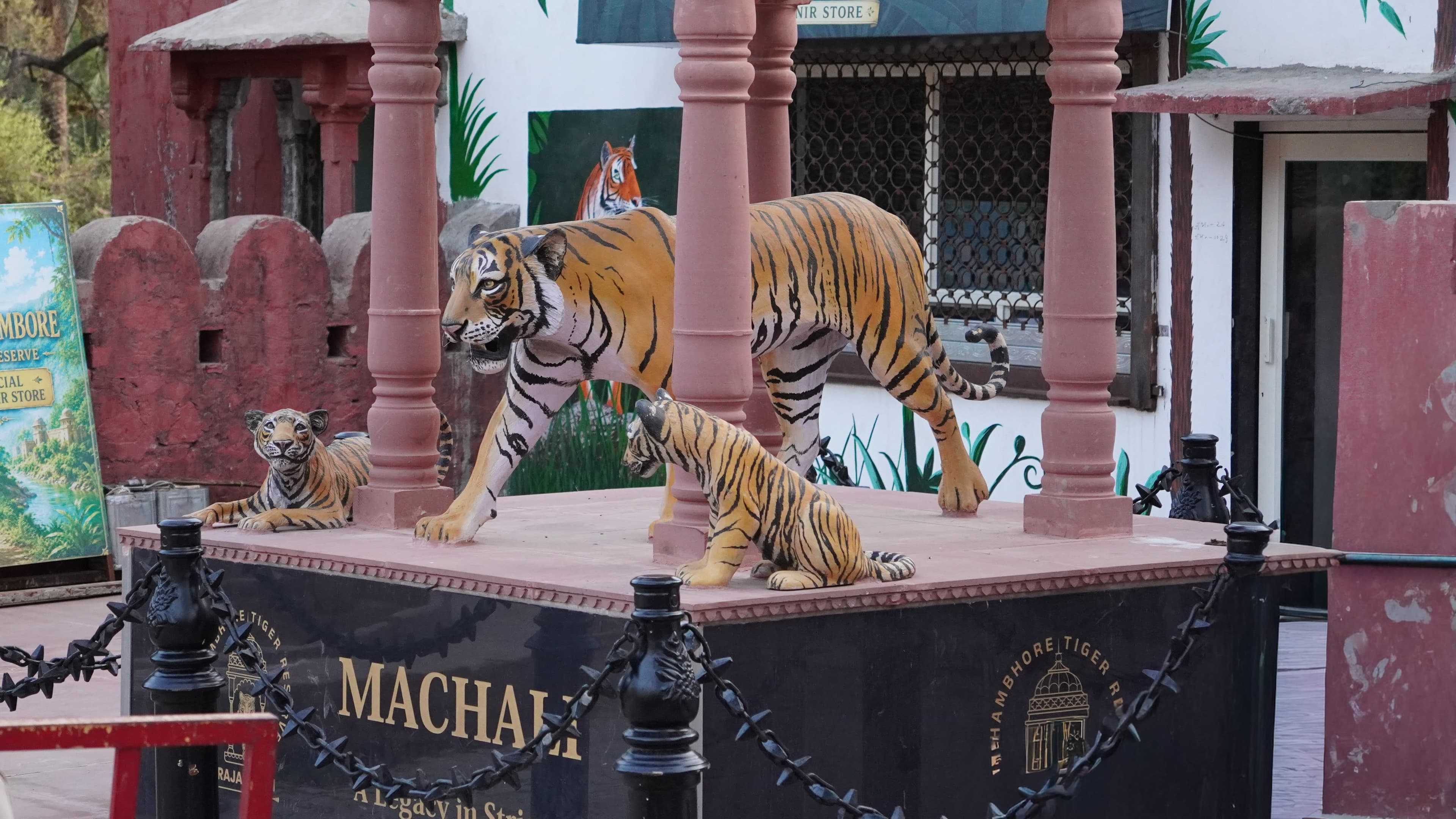
Machli (T-16) — The Tiger Queen of Ranthambore
Discover the captivating story of Machhli (T-16), Ranthambore’s most famous tigress. Known as the "Crocodile Killer" and "Queen of the Jungle," her fierce spirit, legendary battles, and extraordinary legacy redefined the wilderness of India.
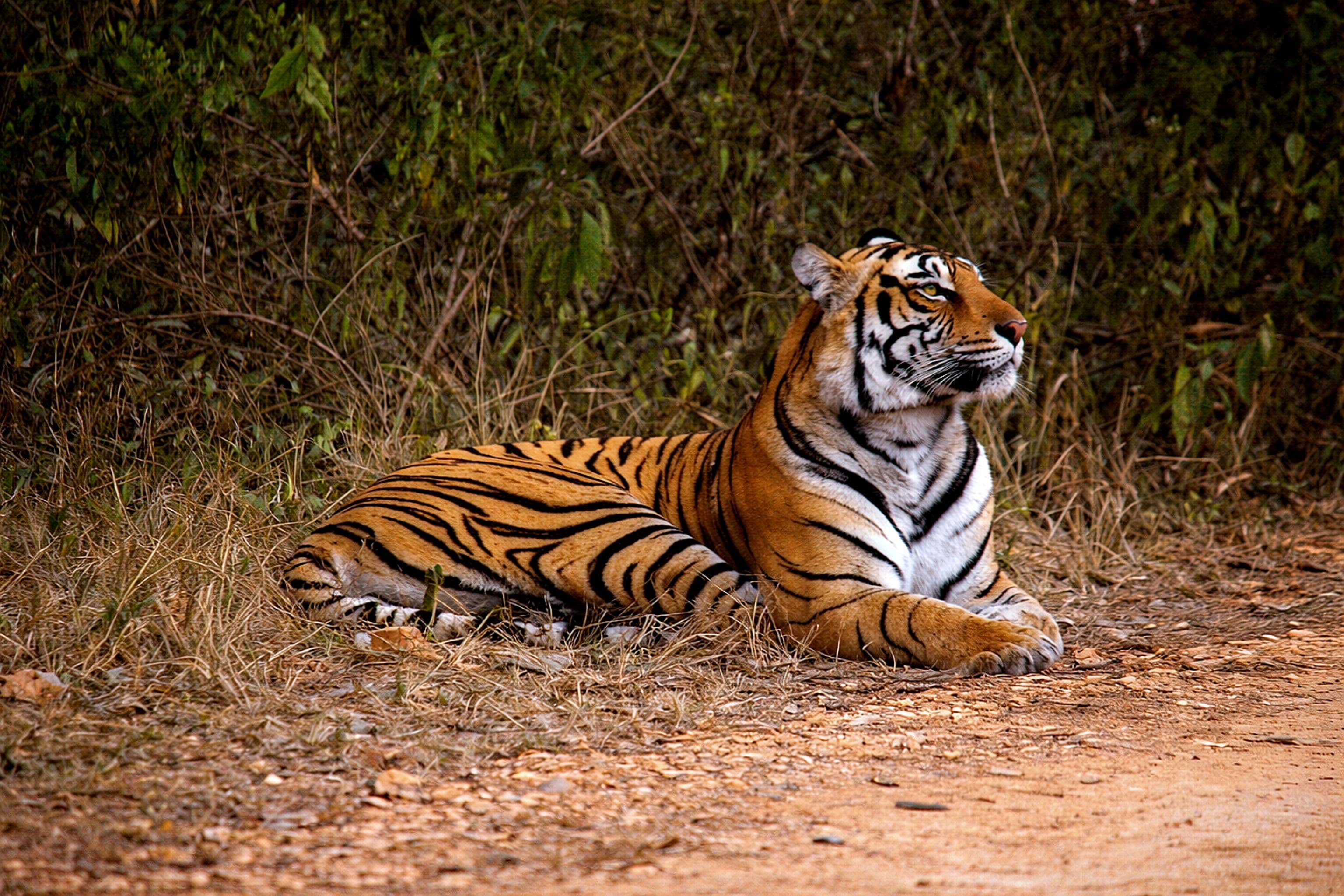
Aurangzeb (T-57) — The Male Behind Ranthambore's Zone 1 Cubs
Aurangzeb (T-57), also recorded as Singhasth, was a dominant Ranthambore male who fathered Noor's 2016 litter — including Sultana. He did not, despite the myth, father Riddhi and Siddhi.
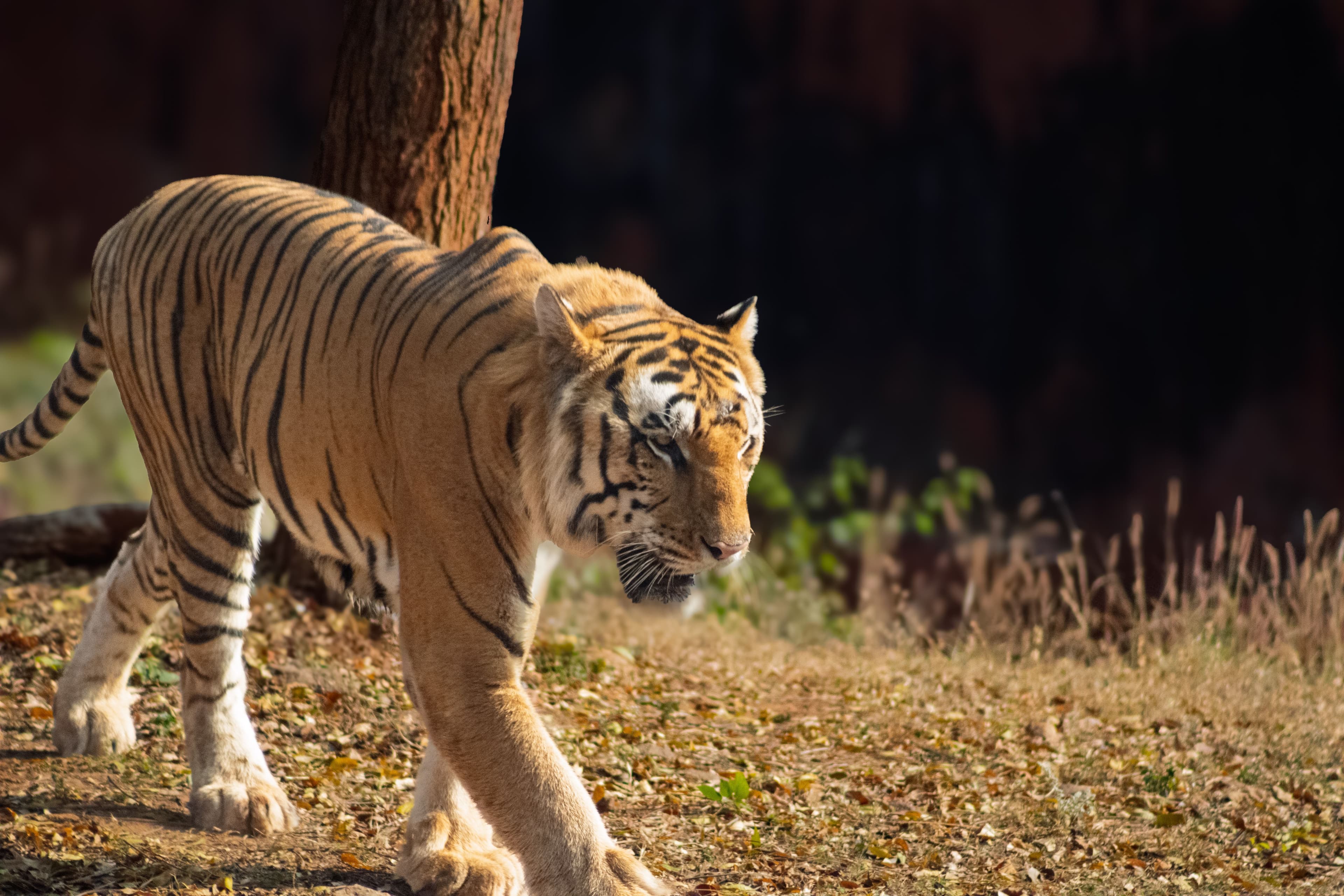
Ganesh (T-120) 'Charger' — The King of Ranthambore's Lakes
Ganesh (T-120), the mock-charging male of Zones 3–4, is Riddhi's mate, father of Shubh and the 2026 cubs — and, through his mother Chanda, a great-great-grandson of Machhli himself.
Husn Ara (T-30) — Matriarch of the Gilai Sagar Line
Husn Ara (T-30), a prolific tigress of the Gilai Sagar dynasty, mothered a string of well-known Ranthambore tigers including Hamir (T-33), Fateh (T-42) and Surzan (T-43).
Kachida Female (T-5) — The Tigress Behind a Conservation Miracle
Kachida Female (T-5) died young in 2011, orphaning two tiny cubs — but her death set up the most extraordinary tiger story ever recorded at Ranthambore, and rebuilt a whole reserve.