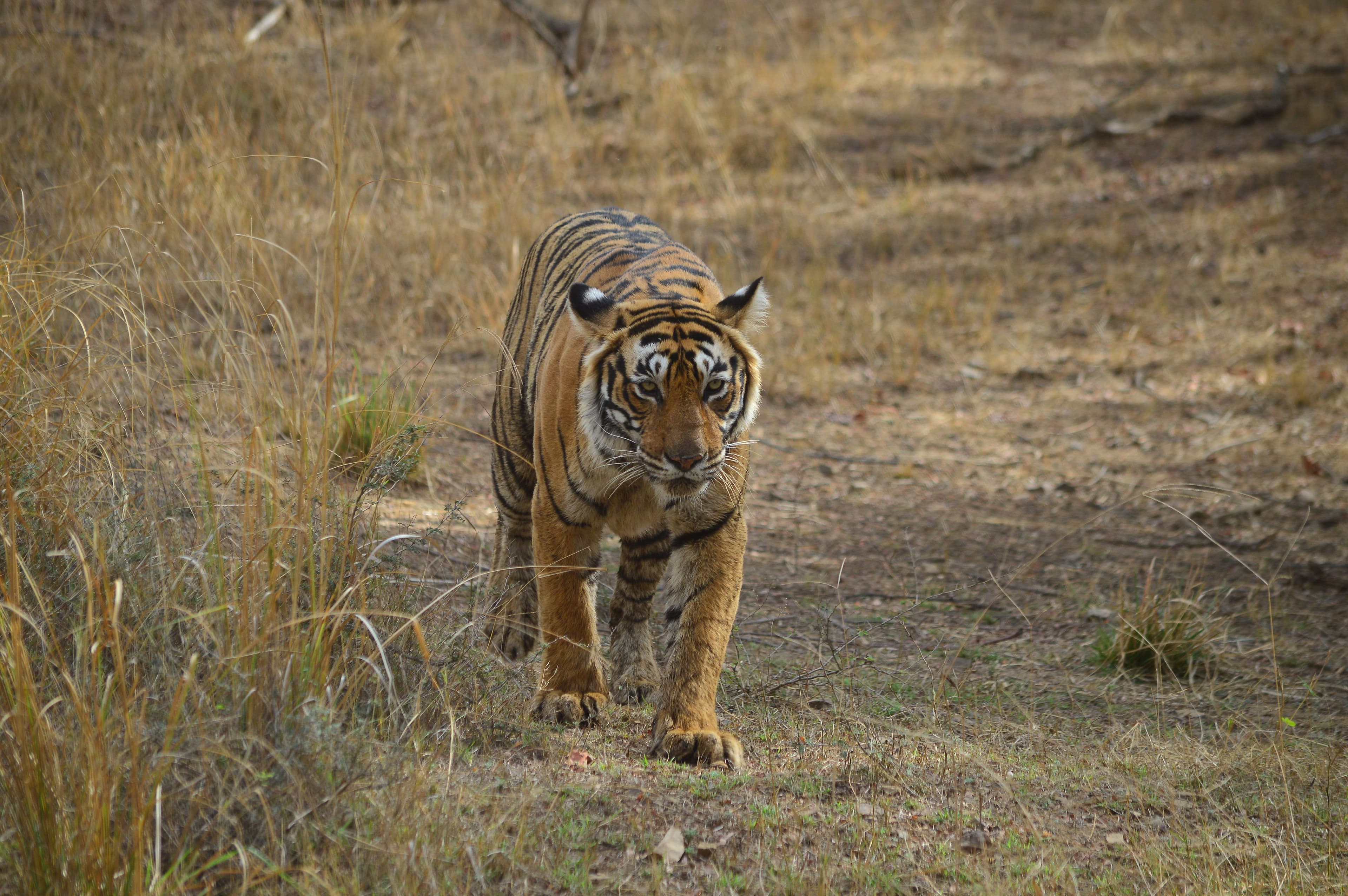
Packman, coded T-85, was the only male in the most famous tiger litter of modern Ranthambore — born in February 2014 to Krishna (T-19) and the Star Male (T-28), brother to Arrowhead (T-84) and Lightning (T-83). His sisters' stories became dynastic sagas. His became something shorter and harder, and just as true to what wild tigers are: he died at about five years old, alone, in the Khandar range, after a territorial fight.
Some family-tree charts circulating online list Packman as the son of the tigress Ladli (T-8). The forest department's record is clear that he was Krishna's cub from the 2014 litter — one of the identification errors we correct on our verified family tree.
The Cub With the Video-Game Name
Like every named tiger in the park, Packman's name was an identification aid first and a nickname second: guides saw in one of his facial stripe patterns the open-mouthed wedge of the arcade character Pac-Man, and the name stuck (park records spell it "Packman"). As a cub and sub-adult he was a fixture of Zones 2 to 4, roaming with his mother and sisters around Padam Talao, Rajbagh and Malik Talao — bolder than Lightning, bigger by the month, and a favourite of photographers who knew the window with a young male is always brief.
Pushed Out: A Young Male's Lot
A tigress can sometimes inherit a slice of her mother's territory, which is how the lake queens' line persists. A young male gets no such inheritance. As Packman approached maturity around 2016–17, the dominant males of the tourism zones — his own father among them — began treating him as a rival, and he was pushed steadily east and south, away from the lakes and toward the Khandar side of the reserve.
That country is the proving ground where Ranthambore's surplus males either win a territory or die trying. Packman spent his last years there as a floater — a male without settled ground, moving through the fringes of other tigers' ranges, hunting where he could. Guides tracking pugmarks reported him fit and formidable; what he never found was a vacancy.
Death in the Khandar Range
In 2019, forest staff found Packman's body, several days old, in the Khandar range. The wounds told an unambiguous story: a territorial fight with another male, the single most common cause of death for male tigers everywhere. He was about five and a half — almost exactly the age at which a male either takes a territory or is broken by one who holds it.
There is no villain in that ending. His great-nephew Shubh (T-2505) faces the same arithmetic today, and the male who eventually displaced the old order at the lakes, Ganesh (T-120), won his ground the same way Packman lost his. Roughly half of all male tigers die in their first serious bid for territory — a figure that holds across India's reserves, as long-term studies compiled under Project Tiger show.
Frequently Asked Questions
Who was Packman's mother — Krishna or Ladli?
Krishna (T-19). He was the single male in her February 2014 litter with the Star Male (T-28). The claim that he was Ladli's (T-8) son appears on some fan charts but contradicts the forest department record.
How did Packman die?
He was found dead in the Khandar range in 2019, aged about five, with injuries consistent with a territorial fight with another male tiger.
Why was he called Packman?
For a stripe pattern on his face that guides thought resembled the arcade character Pac-Man — identification marks are where nearly all Ranthambore tiger names begin.
Did Packman leave any cubs?
None are recorded. He died before winning a stable territory, and without territory a male tiger rarely sires documented litters.
Similar Articles
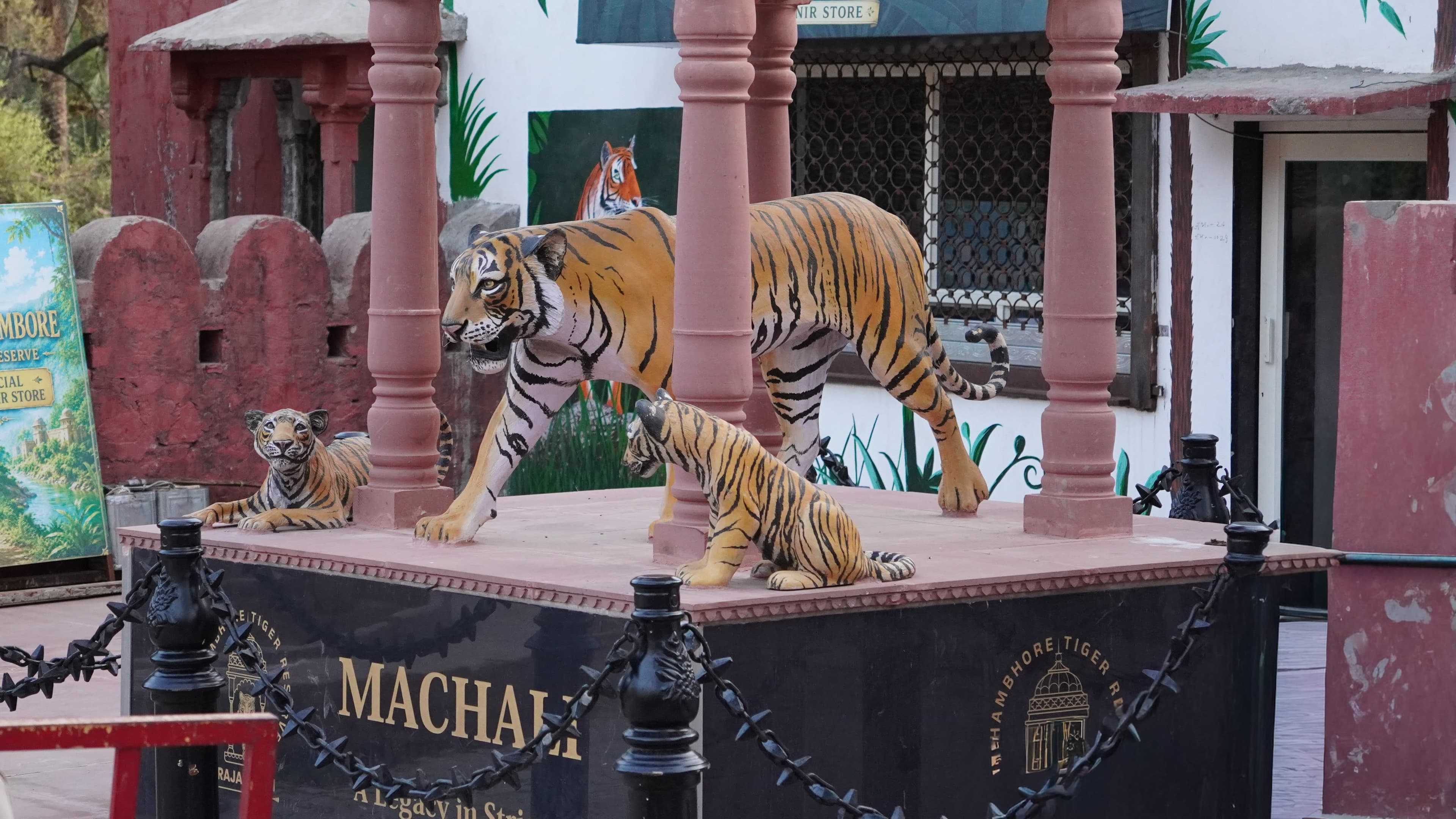
Machli (T-16) — The Tiger Queen of Ranthambore
Discover the captivating story of Machhli (T-16), Ranthambore’s most famous tigress. Known as the "Crocodile Killer" and "Queen of the Jungle," her fierce spirit, legendary battles, and extraordinary legacy redefined the wilderness of India.
Is really Ustad (T-24) a Man-Eater?
Was Ustad (T-24) truly India's most feared man-eater, or was he a wild tiger caught in the growing conflict between greedy human and nature? Unearth the story behind one of Ranthambore's most controversial legends.
Aurangzeb (T-57) — The Male Behind Ranthambore's Zone 1 Cubs
Aurangzeb (T-57), also recorded as Singhasth, was a dominant Ranthambore male who fathered Noor's 2016 litter — including Sultana. He did not, despite the myth, father Riddhi and Siddhi.
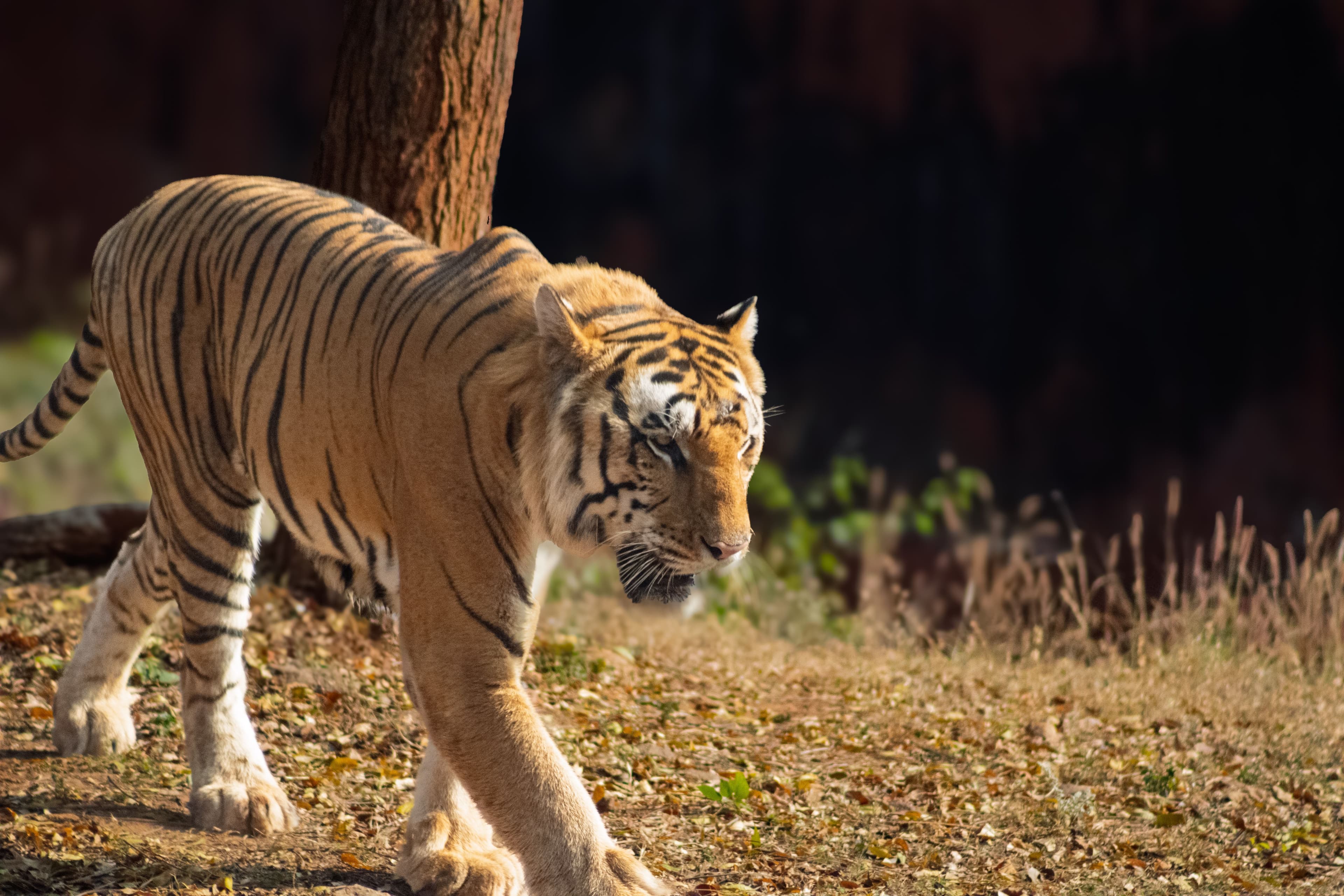
Ganesh (T-120) 'Charger' — The King of Ranthambore's Lakes
Ganesh (T-120), the mock-charging male of Zones 3–4, is Riddhi's mate, father of Shubh and the 2026 cubs — and, through his mother Chanda, a great-great-grandson of Machhli himself.
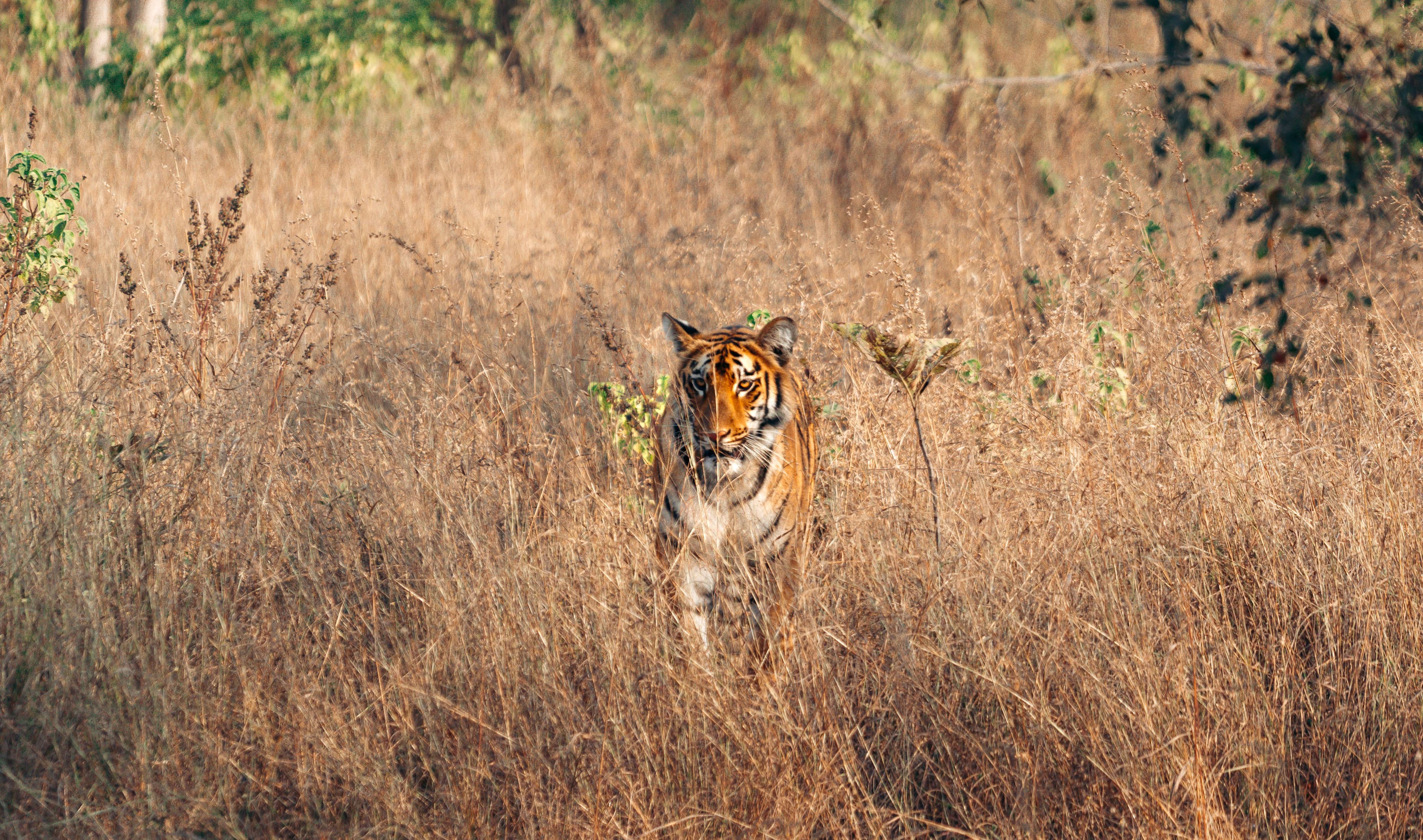
Husn Ara (T-30) — Matriarch of the Gilai Sagar Line
Husn Ara (T-30), a prolific tigress of the Gilai Sagar dynasty, mothered a string of well-known Ranthambore tigers including Hamir (T-33), Fateh (T-42) and Surzan (T-43).