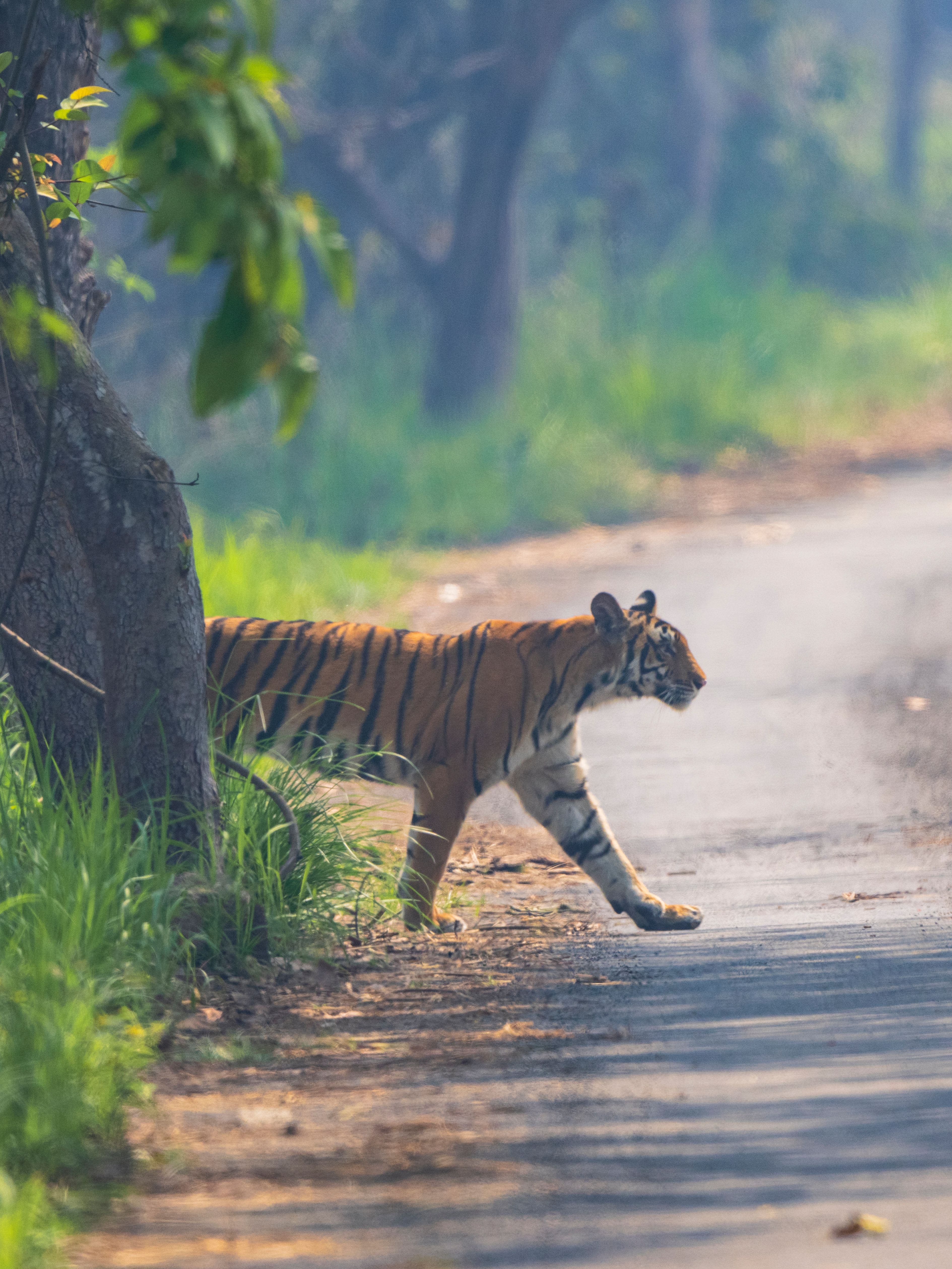
For every tiger that becomes a legend at Ranthambore's lakes, a sibling walks out of the spotlight and into the park's silent interior. Lightning, coded T-83, is that tiger. Born in February 2014 to Krishna (T-19) and the Star Male (T-28), she grew up beside her sister Arrowhead (T-84) and brother Packman (T-85) in the most-watched tiger nursery on Earth — and then, as tigers must, went her own way.
A Cub of the Lakes
Lightning earned her name the way most Ranthambore tigers do: from her stripes. Guides identified her by a jagged, bolt-like marking on her flank, distinct from the arrow-point on her sister's cheek that named Arrowhead. Between 2014 and 2016 the three cubs were the park's star attraction, trailing Krishna around Rajbagh and Padam Talao, play-fighting in the shallows and learning to stalk sambar at the water's edge in full view of safari vehicles.
As the litter approached independence, the sisters' rivalry sharpened. Prime lakeside territory can support only one queen, and by 2017 it was Arrowhead who had claimed it — repeating the family pattern of daughters displacing mothers that runs through the whole lake dynasty. Lightning, the quieter of the two, did what the losing sibling in a tiger family always does: she dispersed.
Beyond the Tourism Zones
Lightning shifted away from the lake circuit toward Ranthambore's vast non-tourism interior — the ridges and ravines stretching toward the Khandar side and the Kailadevi Wildlife Sanctuary, the same wild country that later swallowed the trails of tigers like Sultan (T-72). Ranthambore Tiger Reserve covers more than 1,300 square kilometres, and its tourism zones show visitors only a fraction of it; a tigress can live a full life out there and be photographed only by camera traps.
That is, most likely, what Lightning did. Occasional camera-trap records and unconfirmed sightings placed her in the outer ranges in the years after her dispersal, but she was never again a regular of the safari circuit. Her current status is officially untraced — not confirmed dead, simply beyond the reach of the daily record. On our family tree she is marked "untraced," the honest label for a tiger the forest department lost regular contact with.
Why Lightning's Story Matters
It is tempting to treat tigers like Lightning as footnotes, but dispersal is the engine of tiger conservation. Young tigers pushing into empty country is exactly how Ranthambore's population — about 81 tigers as of mid-2026 — spills into Kailadevi, Dholpur, Ramgarh Vishdhari and beyond, a process the National Tiger Conservation Authority actively manages with relocations when the corridors fail. Arrowhead got the lakes and the fame; Lightning carried the same Machhli bloodline into the landscape where the next chapter of Rajasthan's tiger recovery is being written.
Frequently Asked Questions
Who were Lightning's parents and siblings?
She was born in February 2014 to Krishna (T-19), fathered by the Star Male (T-28). Arrowhead (T-84) was her sister and Packman (T-85) her brother.
Is Lightning still alive?
Unknown. After losing the lake territory contest to Arrowhead around 2017 she dispersed into the non-tourism ranges, and there has been no regular confirmed record of her since. She has never been confirmed dead.
Why is she called Lightning?
For a jagged, lightning-bolt-shaped stripe marking guides used to identify her as a cub — the same way Arrowhead was named for the arrow-point mark on her cheek.
Can visitors see tigers like Lightning on safari?
Not her specifically, but her family holds the same ground she grew up on. Her niece Riddhi (T-124) rules the lake zones today — Zones 3 and 4 are the place to look, as our safari zones guide explains.
Similar Articles
Machli (T-16) — The Tiger Queen of Ranthambore
Discover the captivating story of Machhli (T-16), Ranthambore’s most famous tigress. Known as the "Crocodile Killer" and "Queen of the Jungle," her fierce spirit, legendary battles, and extraordinary legacy redefined the wilderness of India.
Is really Ustad (T-24) a Man-Eater?
Was Ustad (T-24) truly India's most feared man-eater, or was he a wild tiger caught in the growing conflict between greedy human and nature? Unearth the story behind one of Ranthambore's most controversial legends.
Aurangzeb (T-57) — The Male Behind Ranthambore's Zone 1 Cubs
Aurangzeb (T-57), also recorded as Singhasth, was a dominant Ranthambore male who fathered Noor's 2016 litter — including Sultana. He did not, despite the myth, father Riddhi and Siddhi.
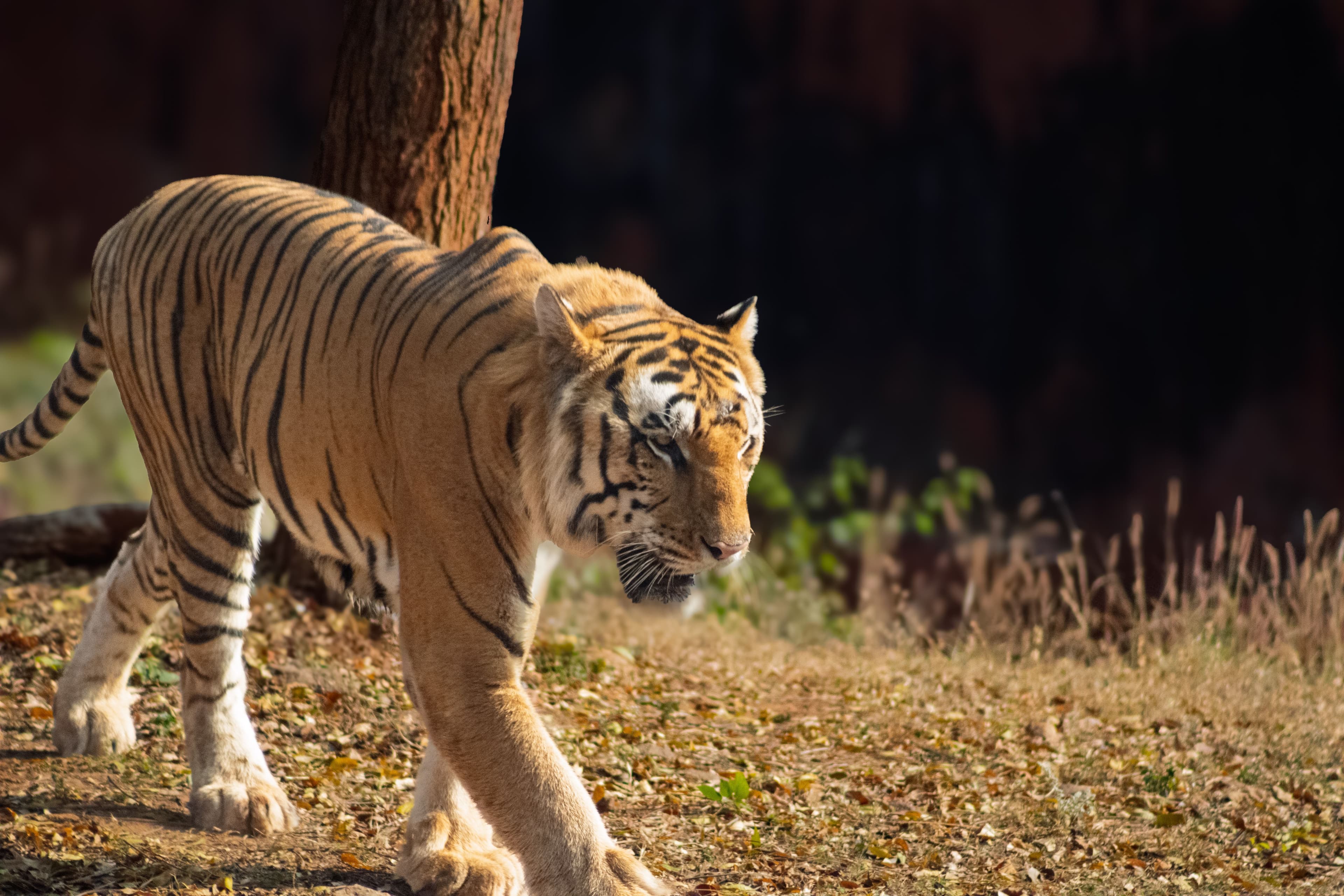
Ganesh (T-120) 'Charger' — The King of Ranthambore's Lakes
Ganesh (T-120), the mock-charging male of Zones 3–4, is Riddhi's mate, father of Shubh and the 2026 cubs — and, through his mother Chanda, a great-great-grandson of Machhli himself.
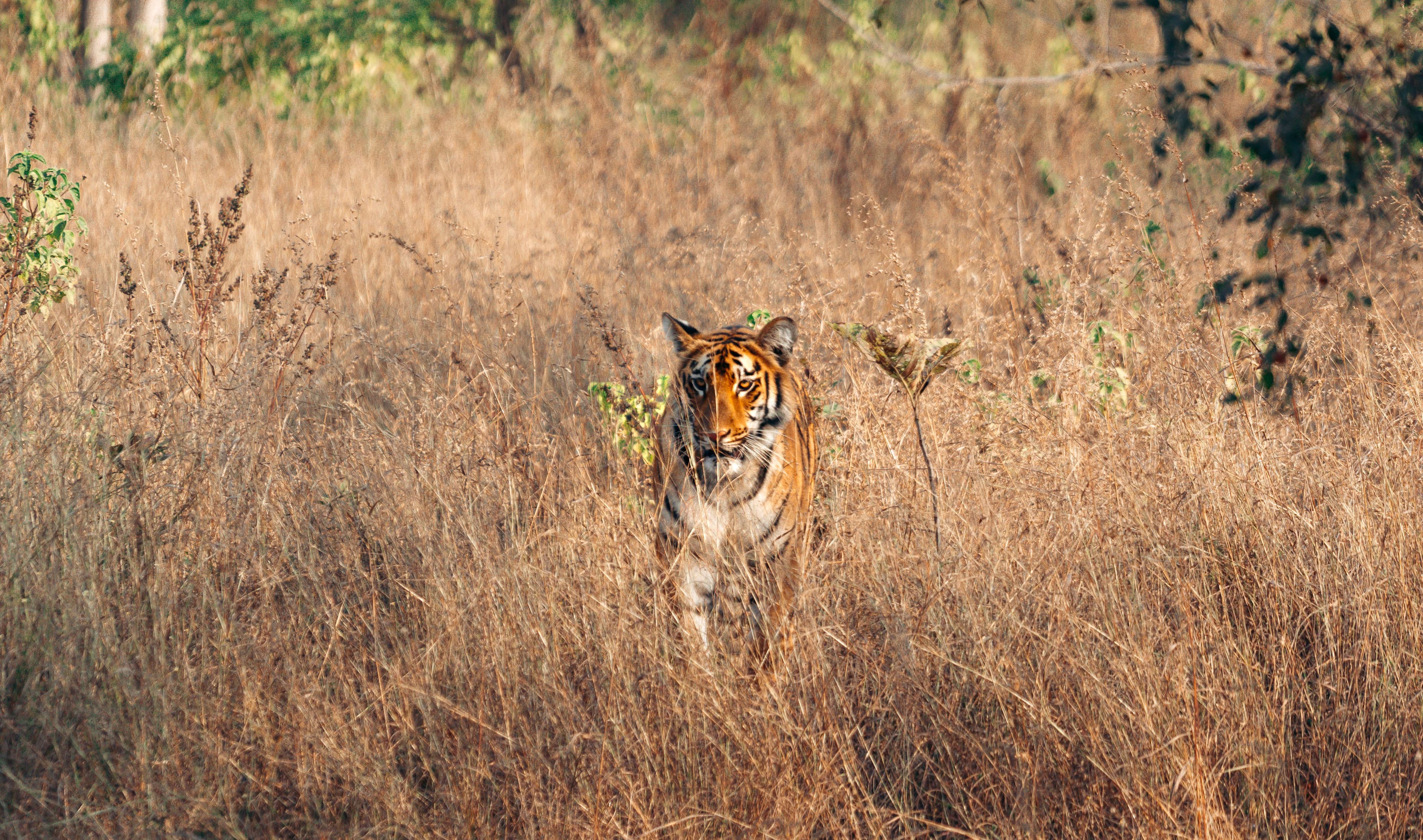
Husn Ara (T-30) — Matriarch of the Gilai Sagar Line
Husn Ara (T-30), a prolific tigress of the Gilai Sagar dynasty, mothered a string of well-known Ranthambore tigers including Hamir (T-33), Fateh (T-42) and Surzan (T-43).