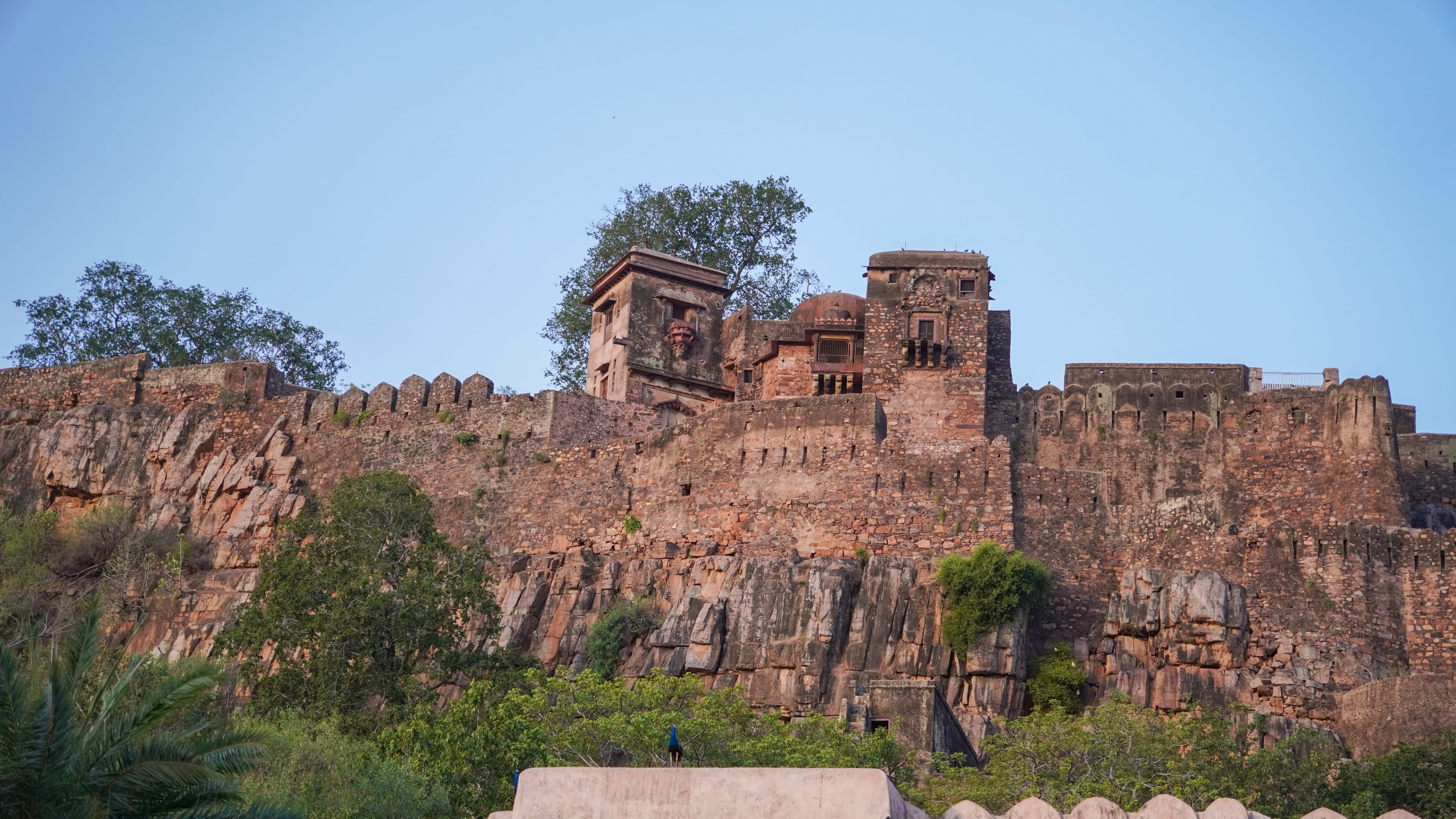
Ranthambore Fort timings are simple: the fort is open every day from sunrise to sunset, roughly 6:00 am to 6:00 pm, and entry is free — you do not need a safari permit or a park ticket to visit. That surprises most visitors, because the fort sits inside Ranthambore National Park. This guide covers the practical side of a fort visit: opening hours, the ticket question, how to reach it, the climb, and how long to allow.
For the fort's thousand-year story — the seven gates, the Chauhans, the jauhar of 1301 — read our Ranthambore Fort history guide. This one is about getting you up there.
Ranthambore Fort Timings
The fort opens at sunrise and closes at sunset — in practice about 6:00 am to 6:00 pm, shifting slightly with the season. There is no weekly closing day. Two timing rules matter more than the official hours. First, start the climb no later than 3:30 pm: the walk up takes 15–20 minutes, the grounds are large, and staff begin moving visitors down well before dark. Second, go in the morning if you can — the climb is steep enough that the midday heat makes a real difference from March onwards, and the light over Padam Talao from the ramparts is at its best early.
If your visit is timed for the Trinetra Ganesh temple inside the fort, plan around the aarti schedule — five aartis run daily from about 6 am to 8 pm, and the temple's own hours differ from the fort's. Our Trinetra Ganesh temple guide has the full aarti timetable.
Ticket Price: Is Ranthambore Fort Free?
Yes — entry to Ranthambore Fort is free. There is no ticket counter at the gate and no charge to walk up, largely because the fort doubles as an active pilgrimage site: the Trinetra Ganesh temple inside draws worshippers daily, and the route has always stayed open to them. [VERIFY: a few listings still quote a small ASI monument fee of ₹15–25 for Indians and up to ₹200 for foreigners — recent visitors consistently report free entry, but check on arrival in case a fee has been reintroduced.]
Don't confuse the free fort with the park's paid safaris — a jeep or canter safari is a separate, permit-based booking with its own zones, timings, and costs. Visiting the fort gets you inside the park boundary, but not into the tiger zones.
Do You Need a Safari Permit to Visit the Fort?
No safari permit — but since the tiger attacks of 2025 on the temple route, you can no longer take just any vehicle up the fort road. After three fatal attacks on pilgrims and forest staff near the fort between April and June 2025, access was restricted: only the local jeeps licensed for the fort route (these are separate from the safari Gypsies) and private cars with local Sawai Madhopur registration — RJ25 number plates — are allowed to drive to the fort base. If you've driven to Ranthambore in your own car from Jaipur or Delhi, you'll need to park it at your hotel and switch to a local jeep or taxi for this stretch. Walking the approach road on foot is not the workaround it once was, for the same reason the rule exists.
The fort remains the one part of Ranthambore you can experience even when every safari seat is sold out — the local jeeps don't sell out the way zone permits do. And keep your eyes open on the drive in: the approach road passes through real forest, and sightings of deer, langurs, peacocks, and the occasional leopard on this stretch are a regular bonus.
How to Reach Ranthambore Fort
The fort is about 12–13 km from Sawai Madhopur railway station — a 20–30 minute drive. The fort-route jeeps gather at Ganesh Dham, and you hire them directly from the operators there in one of two ways: on a sharing basis, where you pay per seat and the jeep leaves once it fills (cheapest, and quick on busy temple days), or as a private booking, where you take the whole jeep and it waits at the base while you visit. A return trip with waiting time is the standard arrangement either way, since there's no transport waiting at the fort base. If you're staying on the Ranthambore Road hotel strip, any hotel can call a fort-route jeep — it's a daily run for them. Vehicles stop at the parking area below the fort; from that point everyone walks. For trains, stations, and routes into Sawai Madhopur itself, see our guide to reaching Ranthambore.
Prefer a closed car to an open jeep — travelling with elderly parents, or visiting in the summer heat? Local car rentals with RJ25-registered vehicles do the fort run too, or contact us and we'll arrange the vehicle alongside your safari.
The Climb: Steps, Time, and What to Carry
From the parking area, a stone stairway climbs about 65 metres up the hillside to the main gates — ask three locals how many steps and you'll get three answers between 200 and 300, because the path mixes stairs with sloping ramps. Count on a 15–20 minute steady climb, passing through a sequence of the fort's massive medieval gateways as you go. The path is uneven in places but manageable for anyone reasonably mobile; older visitors do it daily on temple days, taking it slowly.
Carry water and wear proper shoes — there are few facilities on top. And watch your bags: the fort's monkeys are professional thieves, and anything edible in an open bag will be taken. Once up, the grounds are extensive — walls run roughly 7 km around the plateau — so allow 90 minutes to 2 hours to see the temple, the Hammir palace ruins, the cenotaphs, and the rampart views over the lakes. All told, budget half a day door to door from your hotel.
Best Time to Visit the Fort
October to March is the comfortable window, same as the park itself — cool mornings, clear light, and the lakes full after the monsoon. April to June is brutally hot for a midday climb; if you visit in summer, go at opening time. Wednesdays and Ganesh Chaturthi (August–September) bring heavy pilgrim crowds to the temple — atmospheric if you want the living fort, slow if you want quiet ruins. Unlike the safari zones, the fort stays open through the monsoon, which makes it the best rainy-season activity in Ranthambore. For the park-wide picture, see our best time to visit Ranthambore guide.
The classic Ranthambore day pairs the two halves of the park: fort in the morning, safari in the afternoon — or the reverse. The fort is free and needs no booking, but safari seats are zone-limited and sell out days or weeks ahead in season, so lock that half in first: check current safari zone availability and build the fort around it.
Frequently Asked Questions
What are Ranthambore Fort's opening hours?
Sunrise to sunset daily — roughly 6:00 am to 6:00 pm, with no weekly closing day. Start the climb by 3:30 pm at the latest so you have time on top before visitors are moved down.
Is there an entry fee for Ranthambore Fort?
Entry is free, with no ticket required — the fort doubles as an active pilgrimage route to the Trinetra Ganesh temple. Some older listings mention a small monument fee, so carry small cash just in case, but recent visitors consistently report walking in free.
Can I visit the fort without booking a safari?
Yes — no safari permit is needed. But since the 2025 tiger attacks on the temple route, only locally registered vehicles (RJ25 plates) and the licensed fort-route jeeps may drive to the base — outside cars must be swapped for a local jeep or taxi in town. It's still the one major Ranthambore experience that never sells out.
How many steps does the climb involve?
Between 200 and 300, mixed with sloping ramps — reports vary because of the ramp sections. The climb takes 15–20 minutes at a steady pace and gains about 65 metres.
How long does a fort visit take in total?
Allow 90 minutes to 2 hours on top for the temple, palace ruins, and rampart views, plus the climb and the 20–30 minute drive each way from town — about half a day door to door.
Similar Articles

Trinetra Ganesh Temple Ranthambore: Timings & History
Trinetra Ganesh Temple timings: five aartis daily from 6 am to 8 pm inside Ranthambore Fort. Darshan hours, King Hammir's legend and the wedding-card ritual.
Ranthambore Fort History: Who Built It & the 7 Gates
Who built Ranthambore Fort, and why did it fall? A 1,000-year UNESCO citadel with seven gates, hidden temples, and jauhar legends — plus visiting tips.