Ranthambore and Mukundra Hills belong to the same stretch of Rajasthan's Hadoti tiger landscape, and several of Mukundra's tigers were born in or translocated from Ranthambore itself. But the two reserves are at very different stages, and choosing between them — or deciding to visit both — comes down to a few clear differences.
Tiger Density: No Contest, Yet
Ranthambore is home to more than 80 Bengal tigers, one of the highest tiger densities anywhere in India, built up over five decades since Project Tiger began in the 1970s. Mukundra, by contrast, holds six tigers as of early 2026 — two males, three females and one cub — following years of reintroduction efforts from Ranthambore. Anyone whose primary goal is a tiger sighting should treat Ranthambore as the main event and Mukundra as a bonus, not the other way round.
Crowds and Permits
Ranthambore's popularity means permits for its core zones are booked out well in advance, often 90 days ahead in peak season, and jeep safaris typically run ₹2,500–4,000 per person depending on zone and season. Mukundra has only just opened its main tourist safari route through the Borabas Range, in August 2026, so it remains far quieter, with none of the permit competition that defines a Ranthambore booking.
What Mukundra Offers Instead
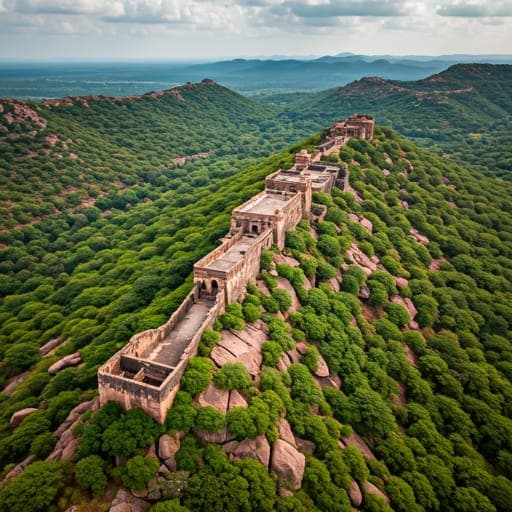
Mukundra's case for a visit does not rest on tiger numbers. Leopards and sloth bears are genuinely common across its forests, the Chambal River scenery and heritage ruins along the Borabas route add a dimension Ranthambore's safaris don't have, and it is the rare Indian tiger reserve to offer both a jungle safari and a river-based boat safari. At ₹1,000 per person for a shared gypsy seat, or ₹6,000 for a full private vehicle, it is also considerably cheaper than a Ranthambore safari.
Best of Both: A Combined Itinerary
Given Mukundra sits roughly 130 km, or about three hours, from Sawai Madhopur — closer still by train — pairing the two is a realistic add-on rather than a separate trip. A common pattern is two or three safaris in Ranthambore for the best tiger odds, followed by a day trip or overnight stop in Kota for a Mukundra jungle safari and the Chambal boat safari, rounding out the visit with Kota's own forts and river gardens. See the full Mukundra Hills guide and how to reach it from Ranthambore for planning details.
Frequently Asked Questions
Is Mukundra Hills worth visiting instead of Ranthambore?
Not instead — as an addition. Ranthambore remains the far stronger choice for tiger sightings; Mukundra is best treated as a quieter, more affordable extension for travelers already in the region who want leopards, sloth bears and river scenery without competing for permits.
Can both reserves be visited on one trip?
Yes. With around three hours of road travel, or just over an hour by train, between Sawai Madhopur and Kota, both reserves comfortably fit into a single Rajasthan wildlife itinerary.
Similar Articles
How to Reach Mukundra Hills Tiger Reserve from Kota, Ranthambore & Jaipur
Road, rail and air options for reaching Mukundra Hills Tiger Reserve near Kota, plus how to combine it with a Ranthambore tiger safari.
Mukundra Hills Safari Cost: Gypsy Prices, Inclusions & Booking
What a Mukundra Hills jungle safari costs — shared jeep seats, private gypsy hire, what's included, and how the newly opened Borabas Range route compares with Ranthambore.
Mukundra Hills Tiger Reserve: A Complete Guide to Rajasthan's Third Tiger Reserve
Mukundra Hills Tiger Reserve near Kota is Rajasthan's third tiger reserve, built around the historic Darrah Sanctuary. Here is what travelers should know about its history, geography and newly opened safari zones.
Wildlife of Mukundra Hills Tiger Reserve: Tigers, Leopards, Sloth Bears & Birds
Inside Mukundra Hills Tiger Reserve's slowly recovering tiger population, its stronger leopard and sloth bear numbers, and the migratory birds that fill its wetlands each winter.