Mukundra Hills Tiger Reserve is best known today for the tigers translocated here from Ranthambore, but its forests support a far broader cast of wildlife — much of it more reliably seen than the reserve's still-small tiger population.
The Tiger Reintroduction Story
Mukundra is only the third site in India, after Sariska and Panna, where tigers have been deliberately reintroduced into a reserve that had lost them. The programme began in April 2018, when a young male from Ranthambore, RT-91, was relocated and renamed MT-1. A tigress, T-106, followed in December 2018 as MT-2. In February 2019, a male known as T-98 made the journey on his own, walking roughly 120 km from Ranthambore to Mukundra and becoming MT-3. A fourth tiger, T-83 — known in Ranthambore as Lightning — was brought in as MT-4 in April 2019 to give MT-3 a companion.
The following years were difficult. A series of deaths and management setbacks meant the population never grew as hoped, and by December 2024 only one male and one female tiger remained in the reserve. The turnaround began through 2025 and early 2026, when coordinated conservation efforts — including a translocation championed by Lok Sabha Speaker and Kota-region MP Om Birla — brought a four-year-old male, T-2408, into the reserve in January 2026. That arrival took the total to six tigers: two males, three females and one cub, and revived what officials describe as a historic Hadoti tiger corridor linking Mukundra with the neighbouring Ramgarh Vishdhari Tiger Reserve in Bundi district, itself declared India's 52nd tiger reserve.
Leopards, Sloth Bears & Other Predators
While the reserve's tigers remain concentrated in specific pockets, leopards and sloth bears are genuinely common across Mukundra, including in the Borabas Range now open to safaris. Striped hyena, golden jackal, Indian wolf and jungle cat round out the predator list, giving the reserve a livelier general wildlife-sighting record than its tiger numbers alone would suggest.
Deer, Antelope & Other Herbivores
Sambar and chital (spotted deer) frequent the forest edges and water sources, while nilgai (blue bull) and chinkara are common across the drier, more open stretches. The four-horned antelope, or chausingha, one of the more unusual ungulates found in Indian forests, is also present in the reserve.
Birdlife
The lakes, wetlands and river stretches within Mukundra attract a strong seasonal cast of migratory birds each winter, including grey pelicans, bar-headed geese, ruddy shelduck and greylag geese, alongside migratory cuckoos, paradise flycatchers and golden orioles. Resident raptors and vultures are found around the rockier stretches near Ranthambore Fort-style cliff country, making the reserve a worthwhile stop for birders travelling through the region between October and March.
Flora and Landscape
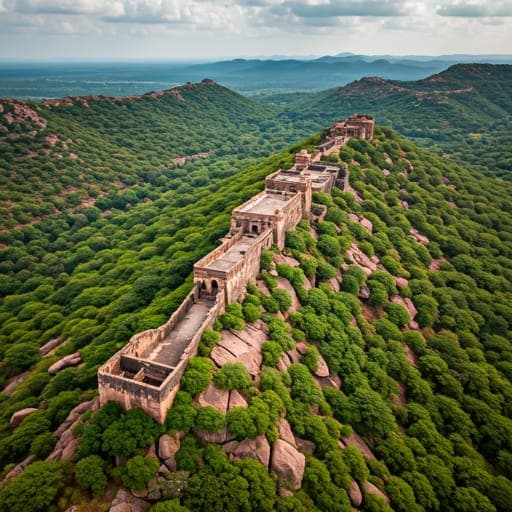
The forest is dry deciduous, dominated by dhok trees and mixed with sheesham, salar, khair, arjun, ficus, gurjan and belimali. Seasonal waterfalls, including Geparnath, Padajhar and Garadia Mahadev, add pockets of green through and after the monsoon, feeding the streams and rock pools that draw wildlife close to the safari routes.
Frequently Asked Questions
How many tigers are in Mukundra Hills Tiger Reserve?
As of early 2026, the reserve holds six tigers: two males, three females and one cub, following the January 2026 translocation of a male tiger from Ranthambore.
What is more likely to be seen on safari — tigers or leopards?
Leopards and sloth bears are considerably more common than tigers across most of Mukundra's safari-accessible zones, including the Borabas Range, so travelers should set expectations accordingly.
Similar Articles
How to Reach Mukundra Hills Tiger Reserve from Kota, Ranthambore & Jaipur
Road, rail and air options for reaching Mukundra Hills Tiger Reserve near Kota, plus how to combine it with a Ranthambore tiger safari.
Mukundra Hills Safari Cost: Gypsy Prices, Inclusions & Booking
What a Mukundra Hills jungle safari costs — shared jeep seats, private gypsy hire, what's included, and how the newly opened Borabas Range route compares with Ranthambore.
Mukundra Hills Tiger Reserve: A Complete Guide to Rajasthan's Third Tiger Reserve
Mukundra Hills Tiger Reserve near Kota is Rajasthan's third tiger reserve, built around the historic Darrah Sanctuary. Here is what travelers should know about its history, geography and newly opened safari zones.
Mukundra Hills vs Ranthambore: Which Rajasthan Tiger Reserve Should Travelers Choose?
Ranthambore and Mukundra Hills sit under three hours apart in the same Hadoti tiger landscape. Here is how the two reserves compare on tigers, crowds, cost and what each is actually best for.